
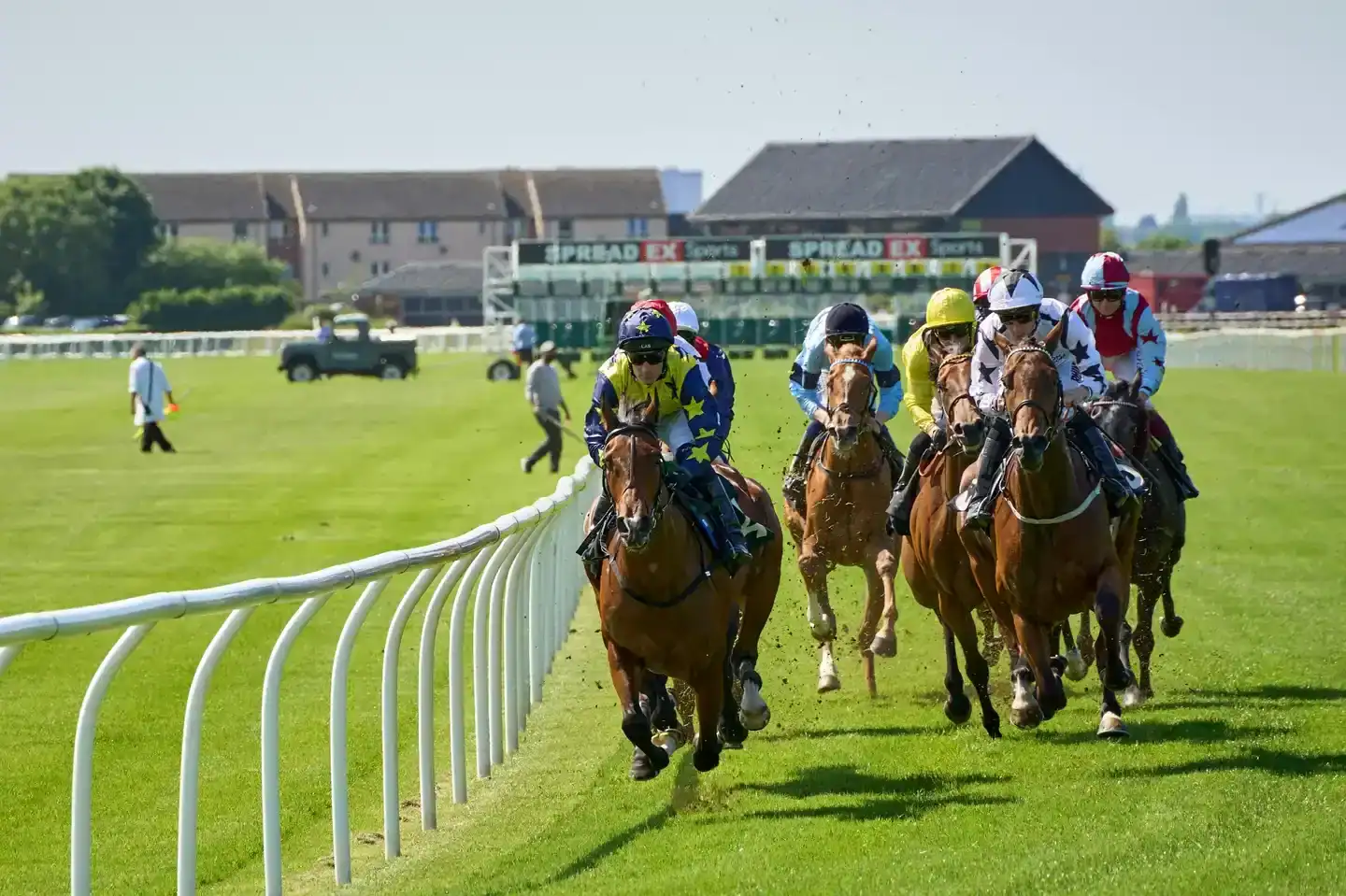


The third day of the Royal Ascot week is admittedly considered the busiest and the most anticipated one. Interest in the latest Ascot Gold Cup odds continues to grow as tensions grow high as the headline race of the entire event, the Ascot Gold Cup, is about to start on the track. One of the most prestigious races for stayers in Britain, it consistently features some of the most excellent runners that specialise in racing over long distances.
The Ascot Gold Cup is a Group 1 flat horse race that accepts both male and female horses aged four years or older. It is run over a distance of 2 miles 3 furlongs and 210 yards (4,014 metres).
In this article, we will take a look at the Ascot Gold Cup odds, give an in-depth review of the available Ascot Gold Cup betting markets, and discuss how betting works in races of this kind. If you want to know more about the Ascot Gold Cup, the list of declared runners, market and expert favourites, as well as the race card for the entire third day, you will find all this information in our article about Ascot Gold Cup runners and race cards.
Ascot Gold Cup Odds
The initial information on runners to participate in this year’s Ascot Gold Cup became public as early as the end of April. While the race wasn’t due until 18 June, early announcements are common for races of such scale and importance as the Gold Cup, or any race that appears on the Royal Ascot race card. By mid-May, the initial list was reduced to 25 runners and was awaiting further transformations. Below you will find the latest Ascot Gold Cup odds for the win betting market.
Ascot Gold Cup Win Odds
| Horse | Age/Weight | Jockey/Trainer | Odds |
| Al Nayyir | 8 9-4 | J: James Doyle
T: Tom Clover |
50/1 |
| Al Riffa | 6 9-4 | J: Dylan Browne McMonagle
T: Joseph O’Brien |
9/1 |
| Caballo De Mar | 5 9-4 | J: Oisin Murphy
T: George Scott |
9/1 |
| Dubai Future | 10 9-4 | J: David Probert
T: Saeed bin Suroor |
50/1 |
| Sweet William | 7 9-4 | J: Robert Havlin
T: John & Thady Gosden |
14/1 |
| Trawlerman | 8 9-4 | J: William Buick
T: John & Thady Gosden |
7/2 |
| Carmers | 4 9-3 | J: Billy Lee
T: Paddy Twomey |
20/1 |
| Furthur | 4 9-3 | J: Colin Keane
T: Andrew Balding |
70/1 |
| Rahiebb | 4 9-3 | J: Ray Dawson
T: Roger Varian |
4/1 |
| Scandinavia | 4 9-3 | J: unconfirmed
T: Adrian O’Brien |
13/8 |
| Miss Alpilles | 5 9-1 | J: Kieran Shoemark
T: Ed Walker |
100/1 |
As soon as the list was out, all bookmaking platforms that include horse racing markets in their offer started publishing odds on the Ascot Gold Cup. These odds will continue to change until the start of the race, as horse racing is one of the most fluctuating sports betting markets. So if you would like to bet early, bear in mind the risks that ante-post betting involves.
As a rule of thumb, bettors who are still finding their footing in horse racing betting and don’t have extensive experience are advised to place their bets after the official declarations of runners are made and full information on the conditions surrounding the race is available.
Formation of odds for the Ascot Gold Cup follows the same principle as other horse races and depends on a number of factors. Below we will take a look at some of the most significant ones.
- Horse’s physical form and performance. The start of each new flat racing season is a signal for bookmakers and bettors to watch for interesting, strong, or highly promising runners, especially if they have a chance to participate in such a big event as the Ascot Gold Cup. Every win and loss in races preceding the Royal Ascot can push the horse in or out of the top favourites and reflect on its odds.
- Non-runners. Non-runners can be announced even after the official declarations are made. As soon as a horse is withdrawn from the race, this affects the odds for other runners because now they have fewer opponents to compete against. This is especially true if the non-runner was viewed as a strong favourite and had shorter odds. To add to this, the actual number of runners at the start line potentially either increases or decreases the number of paid placements, which is important for several betting markets.
- Ground and weather conditions. Many horses have a record of performing better on certain grounds. At the same time, ground conditions may change quite frequently in the days leading up to the race. This will influence the odds on the runners. That’s why bettors are advised to check the ground and weather conditions before placing a bet.
When it comes to betting markets, horse racing is rich in variety. From straightforward to complex bets, every bettor will find something that suits their budget and betting style. Three most popular markets are the win, forecast, and tricast. All three have an easy to follow concept but a varying level of risk. Newbie punters are usually recommended to start their horse racing betting journey with the win market, while experienced bettors with extensive knowledge of the field are welcome to venture into forecast and tricast bets. Let’s take a look at how these markets work when you are placing a wager on the Ascot Gold Cup.
If you are interested in betting on the Royal Ascot races, here you will find the Ascot Gold Cup odds 7bet offers.
Win Odds
The win bet in every sports betting market is based on the same concept, and horse racing betting is no exception. It is what makes this market the easiest to understand and follow even if it is your first time betting on horse races or if you are a newcomer in sports betting.
The focus of the win market is the outcome of the sport event. Your task as a punter is to predict how it will end, i.e. who will win. When betting on horse racing, you are placing your wager on a horse that in your opinion will be the first to come to the finish line and win the champion title.
One important difference you will need to factor in when betting on the win market in horse racing is the number of potential outcomes. For example, when you bet on the same market in football, you only get three betting options: a home team win, an away team win, or a draw. In other games, where draws are not allowed by rules, for example, basketball, you will only have two potential outcomes to the bet.
When it comes to horse racing, every horse standing at the start line can potentially become the winner, even if experts don’t give it high odds of happening. This means that, when betting, you are choosing from as many potential outcomes as there are runners in the race.
In order for your wager to win the bet and qualify for a payout, the horse you placed your stake on has to come to the finish line first and win the race. The payout will be proportional to the offered odds and your stake size.
Below you will find Ascot Gold Cup win odds. The race will be conducted on Thursday, 18 June. Be sure to check the current odds before placing a bet.
Forecast & Tricast Odds
Forecast and tricast betting markets are very popular among seasoned bettors. Punters with less experience are commonly recommended to gain more knowledge of the field, get comfortable with the betting process and the way odds work before they try their hand at these bets.
Ascot Gold Cup Forecast Odds
| Horse | Age/Weight | Jockey/Trainer | 1 | 2 | Any |
| Al Nayyir | 8 9-4 | J: James Doyle
T: Tom Clover |
SP | SP | SP |
| Al Riffa | 6 9-4 | J: Dylan Browne McMonagle
T: Joseph O’Brien |
SP | SP | SP |
| Caballo De Mar | 5 9-4 | J: Oisin Murphy
T: George Scott |
SP | SP | SP |
| Dubai Future | 10 9-4 | J: David Probert
T: Saeed bin Suroor |
SP | SP | SP |
| Sweet William | 7 9-4 | J: Robert Havlin
T: John & Thady Gosden |
SP | SP | SP |
| Trawlerman | 8 9-4 | J: William Buick
T: John & Thady Gosden |
SP | SP | SP |
| Carmers | 4 9-3 | J: Billy Lee
T: Paddy Twomey |
SP | SP | SP |
| Furthur | 4 9-3 | J: Colin Keane
T: Andrew Balding |
SP | SP | SP |
| Rahiebb | 4 9-3 | J: Ray Dawson
T: Roger Varian |
SP | SP | SP |
| Scandinavia | 4 9-3 | J: unconfirmed
T: Adrian O’Brien |
SP | SP | SP |
| Miss Alpilles | 5 9-1 | J: Kieran Shoemark
T: Ed Walker |
SP | SP | SP |
The main objective of the forecast bet is still focused on the outcome of the race but there are a number of differences compared to the win market. Here you choose two horses and place a wager stating that horse A will win the race while horse B will come to the finish line second. Keep in mind that this doesn’t mean your stake will be doubled, as it is considered one single bet.
There are two types of forecast bets. If you are betting on the straight forecast, both horses need to come to the finish line in the exact order you predicted, otherwise you will lose your wager. If you are betting on the reverse forecast, you equally qualify for a win if the horses finish in the order you predicted or in the reverse order, meaning horse B will be the winner and horse A will be placed second.
If any of the horses misses the winning top, your wager will be lost even if the other horse comes as predicted. For example, if, as per your wager, horse A still wins the race but horse B finishes fifth, your stake is lost.
As you can see, now the outcome of your bet depends on the performance of more than one horse. This increases the risks of making an incorrect prediction and requires in-depth knowledge and experience from bettors.
The tricast bet employs the exact same concept, but it adds another risk factor. Here you bet on three horses at once. Your bet defines which one of them will win the race, which one will come to the finish line second, and which one will close the top three.
Same as the straight forecast, straight tricast requires that all horses come to the finish line in the order determined by the bet. Combination tricast allows a bit more flexibility, any combination at the finish line will qualify you for a payout as long as all three horses you bet on make it to the top three.
Below you will find forecast and tricast odds on Ascot Gold Cup. The race will be conducted on Thursday, 18 June. Be sure to check the current odds before placing a bet.
Popular Ascot Gold Cup Betting Markets
Other popular betting markets that are available for Ascot Gold Cup betting include:

Each Way Betting
This betting market became especially popular since the introduction of online betting. The easiest way to wrap your head around its mechanism is to think about it as a 2 in 1 deal of sorts. The concept of this bet is still very much focused on the outcome of the bet but the mechanism behind it has significant differences.
When you bet on the each way market, you place two stakes on the same horse. One of them is for the horse to win the race, the other one is for the same horse to be placed within the paid placement top. Now let’s see how betting on two different outcomes for the same horse works for your wager.
First and foremost, you need to remember that betting on each way doubles your stake. So if you are willing to place £5 on an outcome, it will mean that your total stake will amount to £10 (£5 on win and £5 on place). Because of this, some inexperienced bettors try to avoid this bet. However, in reality it offers you some interesting value.
If the horse you placed your wager on ends up winning the race, you are eligible for not one but two payouts, one for the win market and the other for the place market. Both payouts will be calculated based on corresponding odds and your stake size.
If the horse finishes the race within the paid placement bracket (typically, top two to top four), you will lose your win wager, but your placement wager will still be eligible for a payout. As it is the rule with the simple placement bet, you don’t have to predict the exact place your horse will take in the race; it is enough for your chosen runner to come to the finish line within the defined winning top.
Match Bets
Unlike other betting markets we discussed above, the objective of this one is not to predict the outcome of the race. Instead, you are focusing on the results two horses show in relation to each other. Here is how it works.
You start by choosing any two horses from the list of the declared runners. Depending on your analysis and other market factors, you place a bet that horse A will show a better result in the race compared to horse B. For example, horse A will finish the race in second place, while horse B will come to the finish line fifth. However, keep in mind that you don’t need to predict their actual results, only which one will show a better outcome.
Another thing to notice here is that neither of the horses need to win the race or even be placed for this bet to work, though of course, they may. All that matters for your bet is that the horse you expect to do better in the race does, in fact, outrun the other horse.
Non-Runner No Bet (NRNB)
The official final list of runners for most horse racing events, including the ones as large and significant as the Ascot Gold Cup, is commonly announced within 48 hours before the start of the race. However, even after final declarations, trainers retain the right to withdraw any of their charges from the race for various reasons, including the horse’s or the jockey’s health, ground and weather conditions, and others.
If the horse you placed your bet on was later declared a non-runner, what happens to your stake will very much depend on when exactly you placed it. If you placed your wager after the official declaration had been made, you don’t have anything to worry about, your stake will be simply returned to you in full.
However, if you engaged in ante-post betting, i.e. placed your bet well in advance of the official declarations, you are not entitled to get your stake back. This is one of the risks of ante-post betting and the reason why some bettors prefer not to engage in early betting.
To motivate punters to bet early on, some bookmakers may offer the non-runner no bet promotion. It means that even if your ante-post bet horse is declared a non-runner, instead of losing your stake you will get it back. However, keep in mind that this is a promotional offer rather than an obligation, so check in advance if your bookmaker has it in place for the race you want to bet on.
Please note that the odds are accurate as per the publishing time of the article. Make sure to check the latest odds before placing a bet.
Always remember to gamble responsibly and treat betting as a form of entertainment and not means for financial gain.
Betting is only available to participants above 18 years. Please bet responsibly. BeGambleAware.org