
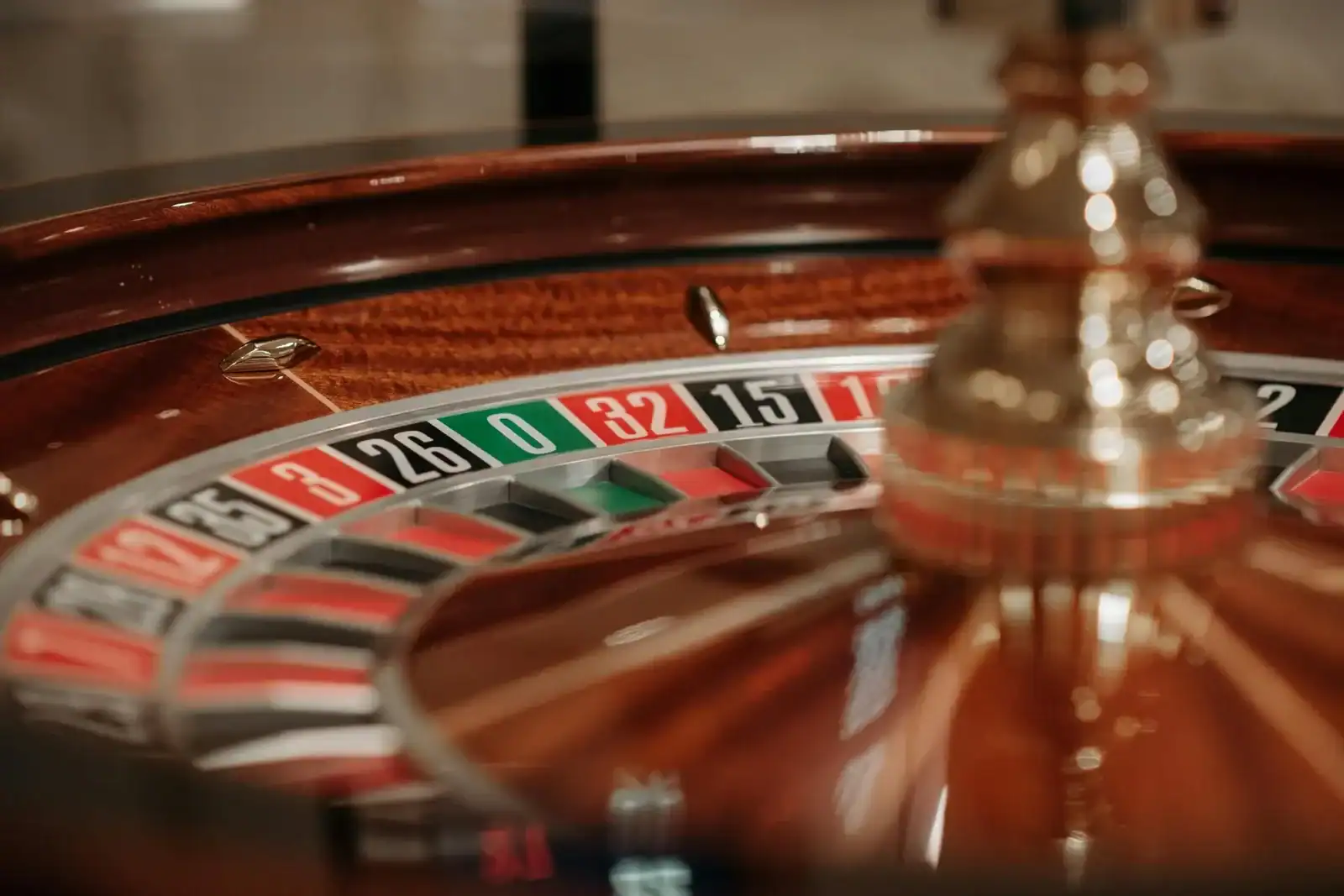


Watch a roulette table carefully, and you’ll notice players pick numbers randomly. Some will choose their birth date. Others will go for popular numbers like 17, 7, or 8. Some players like to follow “hot numbers” that seem to appear frequently.
An important point to note is that roulette is a game built entirely on randomness. European roulette has 37 numbers, and the odds of hitting any number on the wheel are 2.7%. The online roulette wheel runs on RNG, which keeps each spin random and unpredictable. No number hits more than another.
So, where does that leave the idea of the most common roulette numbers? Are there any lucky or safe numbers? Below, we tell you the stats, player habits, and whether any number on the wheel is actually worth favouring.
What Are the Most Common Roulette Numbers?
The European roulette wheel has 37 pockets, and each is the same size. The ball spins and lands randomly, without favouring any number. For example, out of 100 spins, it may go to every number but 8. This doesn’t mean it “owes” that pocket a visit.
The randomness, in fact, is very much expected in the game. A simulation of the American roulette (38 numbers) showed that in 300 spins, one number hit 13 times while another hit only 2 times. It’s quite the same as tossing a coin 10 times. You might get 7 heads and 3 tails. However, this doesn’t mean the coin favours heads. If you toss it a million times, the results will be close to 50/50. The roulette wheel works on the same principle; the larger the sample, the more evenly the numbers tend to land.
So, if you hear players talk about the most common roulette numbers, they usually mean one of these three things:
- Numbers that appeared most in recent spins
- Numbers that other players bet on most often
- Numbers they personally associate with winning.
There are some numbers that get bet on more than others. For example, number 17 sits in the centre of the roulette betting layout, which makes it visually prominent. So, players tend to bet more on this number. Seven is associated with luck. You may see higher payouts on these numbers simply because there are more chips on them. The odds still remain the same.
Also, there have been real cases of biased wheels, especially in physical casinos, which may explain why some numbers are favoured. However, in online games, the bias is removed with RNG.
So, there are no true roulette lucky numbers. The numbers that you may perceive as common may be because of habit or superstition.

10 Best Numbers on Roulette: Do They Exist?
For European wheels, each number has a 2.7% probability of hitting per spin. On an American wheel, it’s 2.63%. These odds never change.
Still, certain numbers get more attention than others. These are the 10 best numbers in roulette you’ll hear about often:
- Number 17 is in the middle of the betting layout, which makes it easily visible. Another reason why this number is popular is because of the James Bond star, Sean Connery. While filming From Russia with Love in 1963, Connery played at a casino and hit 17 three times in a row, defying odds of 1:50,653.
- Number 7 is culturally coded as lucky.
- Number 3 is another “lucky” number, commonly seen in birthday bets.
- Number 23 is a part of the “23 enigma”, a belief that this number appears with unusually high frequency during major life events.
- Number 11 is seen as a “master number” in numerology and is associated with luck and positive energy.
- Number 8 is considered extremely lucky in Chinese culture. In casinos with high Asian clientele, you’ll see this number attract the most betting action.
- Number 22 has no particular cultural weight but is commonly seen in lottery draws.
- While number 13 is considered unlucky in some cultures, Italians associate this number with hitting the jackpot. Chinese, too, believe 13 represents growth and vitality.
- Number 24 is associated with a change in numerology.
- Number 25 is positioned to the right of number 17 on the roulette wheel. Since 17 is one of the most bet-on numbers, players take an additional bet on 25 just in case the ball happens to miss its mark on 17.
Data on the Most Hit Numbers in Roulette
Some online live casinos display a table on the screen of the recent 10 or 20 hits. If you track it for a while, you’ll have some data on the most hit numbers in roulette. However, it’s worth noting that each spin is random and the previous outcome doesn’t affect the next spin.
In the past, mathematicians used to take advantage of janky physical roulette wheels. Dr Richard Jarecki is famously known as the man who beat the roulette wheel in the 1960s. He didn’t find any mathematical bias, though. He and his wife spent months studying the results of thousands of spins to determine the imperfections in the wheel.
So, what does this mean for players hoping to bet on common numbers in roulette? Don’t believe in “hot streaks”. At least not unless you are James Bond! And if legend is to be believed, movie bosses rigged that win to drive publicity for Connery’s film.
Roulette Probability – Why Every Number Has the Same Chance
Every single spin on the roulette wheel produces these probabilities:
-
- The ball will land on red or black: 18/37 chance for the European and 18/38 chance for the American wheel, as there are 18 red and black numbers each.
- The ball will land on an even or odd number: The same probability, 18/37 for the European wheel and 18/38 for the American wheel.
- Straight bet: This is a bet taken on a particular number. Regardless of how lucky you believe the number to be, the probability of landing on your chosen number remains 1/37 (2.7%) or 1/38 (2.6%).
- Dozens bet: 12/37 or 12/38 possibility since there are 12 numbers in a dozen bet. This gives it a 32.4% chance of hitting.
- Column bet: This also has 12/37 or 12.38 odds of hitting.
Difference in European and American Roulettes
If you want to increase your chances of winning, play the European roulette instead of the American version. The American game has an extra green number: the double zero (00). The presence of this extra number slightly decreases the probability of hitting a straight bet.
The house edges are also different in these games. In both games, the payout is 35:1. But in the European version, the true odds are against 36:1 (since there are 36 other outcomes). This gives the house an edge of 2.7%. In the American version, however, the true odds are 37:1, which increases the house edge to 5.26%.
Spins are Always Independent
Mathematically, the probability of any result in this game is 1/n, where n is the number of possible outcomes (37 in European and 38 in American wheels). So, if you were to bet on number 3 37 times, can you expect to win at least once? Actually, no!
The sequence in which the ball hits the wheel always remains independent. It might land on a few numbers multiple times and miss others completely. A number that hasn’t appeared in 100 spins has exactly the same 1:37 chance on the 101st spin as it did on the 1st spin.
Why Players Believe in Common or Lucky Numbers
So, why do so many players still believe in common numbers in roulette? This has to do with some common beliefs:
Gambler’s Fallacy
This is a cognitive bias that makes players believe that past events influence the probability of future events. This term was coined by psychologists Amos Tversky and Daniel Kahneman in 1971 as a part of their work on the “law of small numbers”.
The most famous example is the “Monte Carlo Fallacy”. During a game in 1913, the ball landed on black 26 consecutive times, an event with a probability of 1:66 million. After that, players bet enormous sums on red, convinced that black couldn’t possibly continue. It could, and it did, for much longer than anyone expected. Gamblers lost millions that day.
Pattern Illusion
Humans are extraordinarily good at finding patterns. This helps us to solve problems and make predictions. But when you sit at the roulette table, this skill might work against you. People look for patterns even when the outcomes are genuinely random.
Recency Bias
This one is similar to a pattern illusion, where your brain tends to give disproportionate weight to recent events when forming beliefs about the future. For example, if 23 comes up 5 times in the last hour, it feels more present in your mind. This might reinforce your belief that 23 is a number worth watching.
This is called the hot number bias, where you tend to believe a number is lucky because it landed the most in one session.
Emotional Betting
Finally, there’s an emotional dimension in betting. For example, winning on your birthday number might feel more meaningful compared to a random number. So, you may bet over and over on the same number.
Don’t worry, though! These biases don’t mean that you are reckless or have poor judgment. It’s just how the human brain processes sequential outcomes. Once you understand these biases, you have a more accurate picture of how to pick the best roulette number.
Betting is only available to participants above 18 years. Please bet responsibly. BeGambleAware.org