
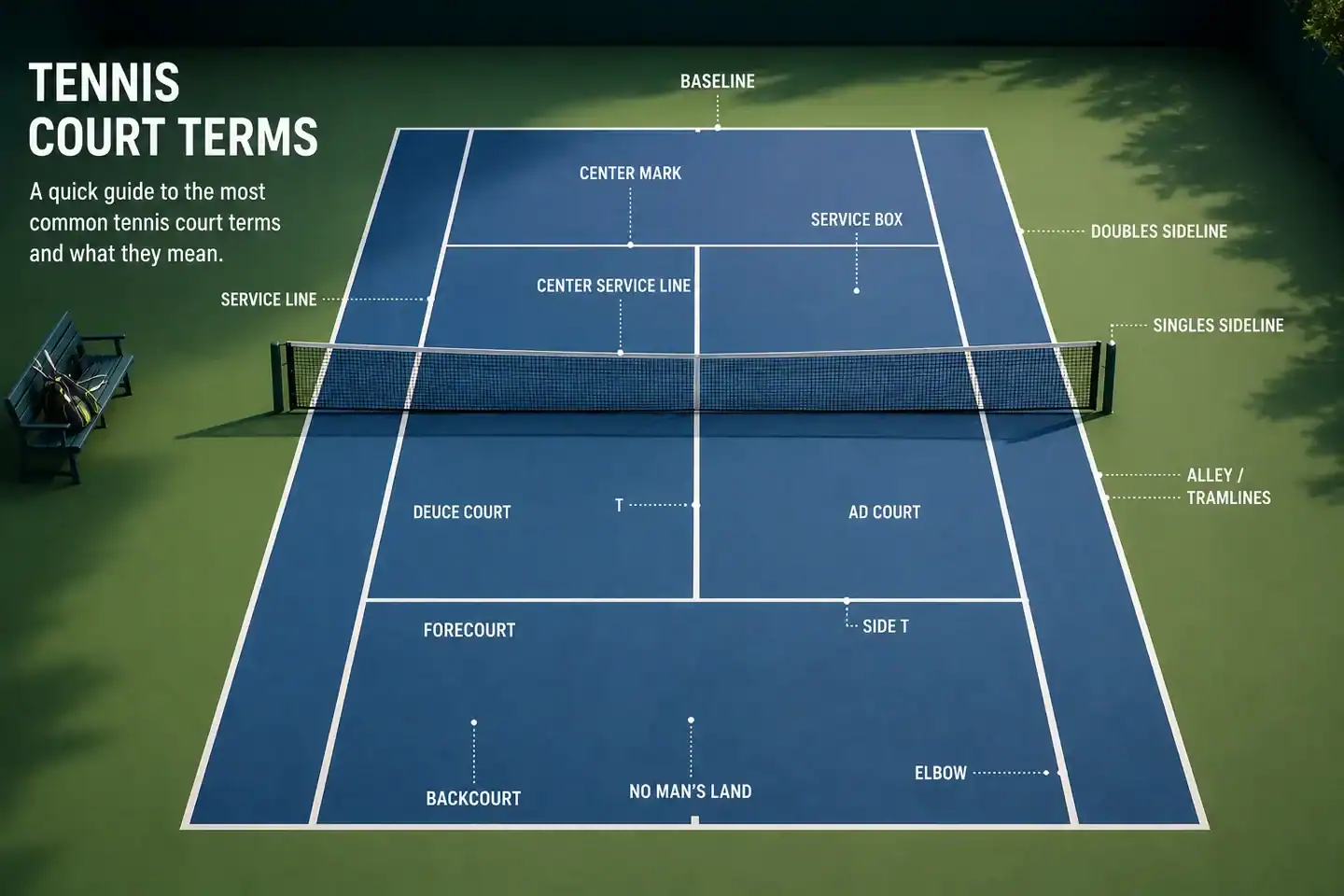

Tennis has its own court terminology, from the baseline and service boxes to the net and different playing surfaces. This glossary explains the most common tennis court terms with short, clear definitions to help you better understand the game.
Court in Tennis
The court in tennis is the playing area. It is divided into two halves by a net and marked with lines that define different playing areas.
Baseline in Tennis
The baseline in tennis is the line at the back of the court. Players serve from behind it and often play rallies from this area.
Center Mark in Tennis
The center mark in tennis is the small line in the middle of the baseline. It separates the deuce and ad sides when serving.
Center Service Line in Tennis
The center service line in tennis divides the two service boxes on each side of the court. It helps determine where a serve must land.
Service Line in Tennis
The service line in tennis runs parallel to the net. It marks the end of each service box.
Service Box in Tennis
The service box in tennis is the area where a serve must land to start the point. There are two service boxes on each side of the net.
Deuce Court
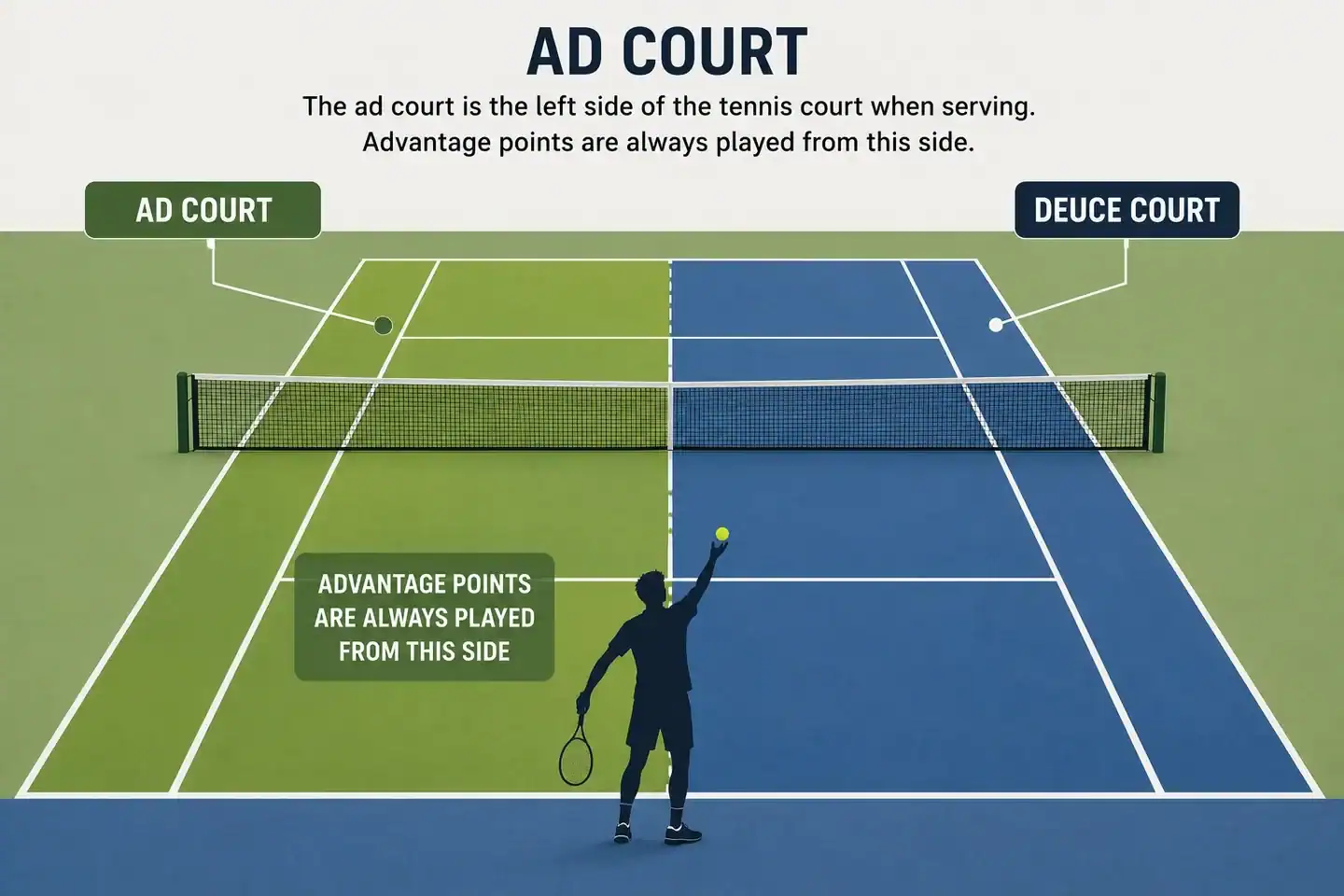
The deuce court is the right side of the tennis court when serving. It is where every game begins and where points are played at deuce.
Ad Court
The ad court is the left side of the tennis court when serving. Advantage points are always played from this side.
Singles Sideline in Tennis
The singles sideline in tennis marks the boundary of the court for singles matches. Balls that land outside this line are out in singles.
Doubles Sideline in Tennis
The doubles sideline in tennis marks the outer boundary of the court for doubles matches. It makes the playing area wider than in singles.
Alley in Tennis
The alley in tennis is the area between the singles and doubles sidelines. It is used only in doubles matches.
Tramlines in Tennis
Tramlines in tennis is another name for the doubles alleys. They are used only in doubles matches.
Backcourt in Tennis
The backcourt in tennis is the area between the baseline and the service line. Players often hit groundstrokes from this part of the court.
Forecourt in Tennis
The forecourt in tennis is the area between the service line and the net. Players usually move into this area to hit volleys.
No Man’s Land in Tennis
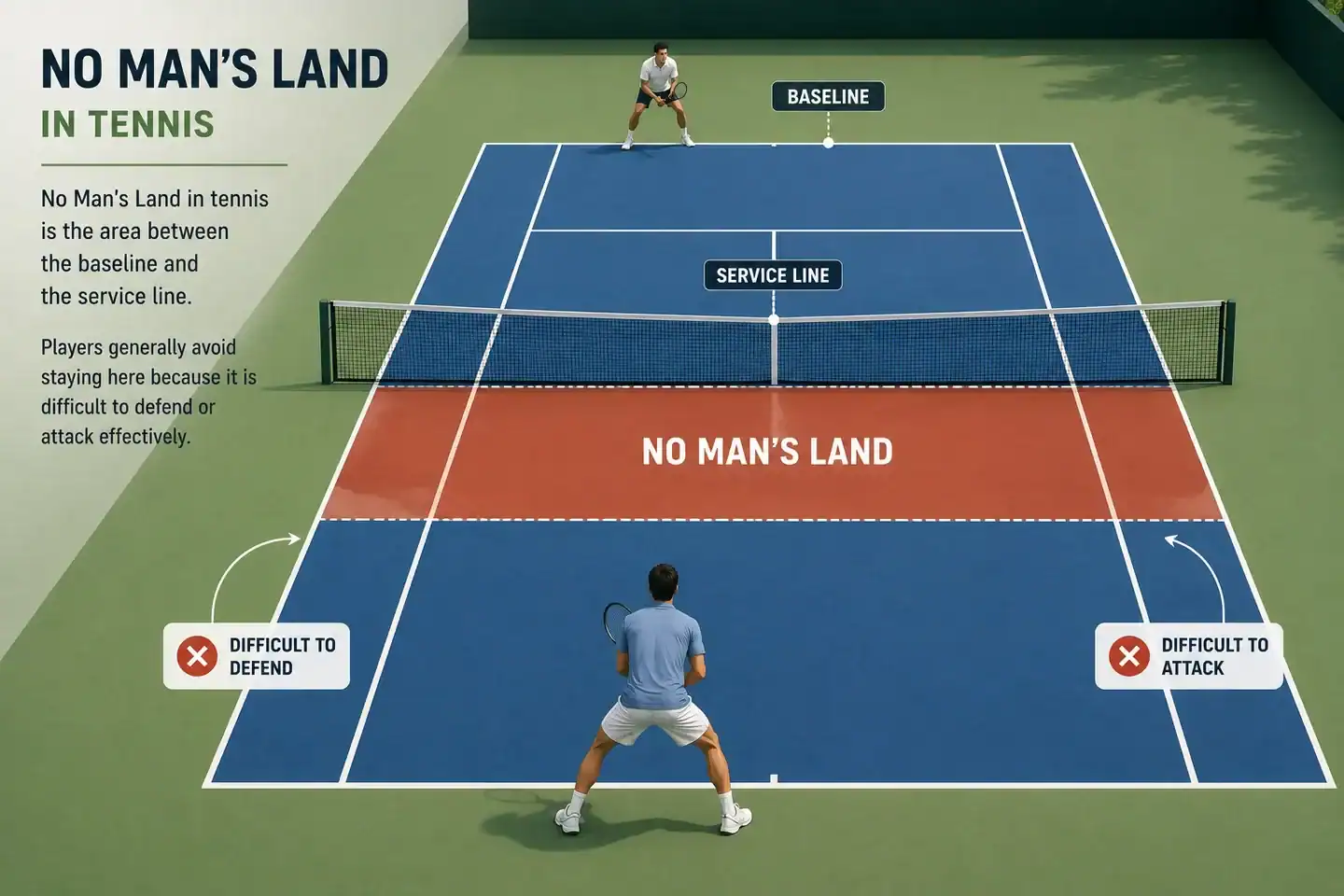
No Man’s Land in tennis is the area between the baseline and the service line. Players generally avoid staying here because it is difficult to defend or attack effectively.
Tennis Net
The tennis net divides the court into two halves. Every shot must pass over the net and land inside the opponent’s court.
Net Cord in Tennis
The net cord in tennis is the top band of the net. A ball that clips it and lands in play can still be a legal shot.
Net Post in Tennis
The net posts in tennis support the net on each side of the court. They keep the net at the correct height during play.
Singles Stick in Tennis
Singles sticks in tennis are poles placed under the net during singles matches. They keep the net at the correct height for singles play.
T in Tennis
The T in tennis is where the center service line meets the service line. It is a common target for accurate serves.
Side T in Tennis
The Side T in tennis is where the service line meets the singles sideline. There are four Side Ts on a tennis court.
Elbow in Tennis
The elbow in tennis is the corner where the baseline meets the doubles sideline. It is often used as a reference point for player positioning.
Hash Mark in Tennis
The hash mark in tennis is another name for the center mark. It helps players position themselves correctly before serving.
Hard Tennis Court
A hard tennis court is made from asphalt or concrete with an acrylic surface. It offers a medium to fast pace and a consistent ball bounce.
Clay Tennis Court
A clay tennis court is made from crushed brick or similar materials. It produces a slower game and a higher ball bounce.
Grass Tennis Court
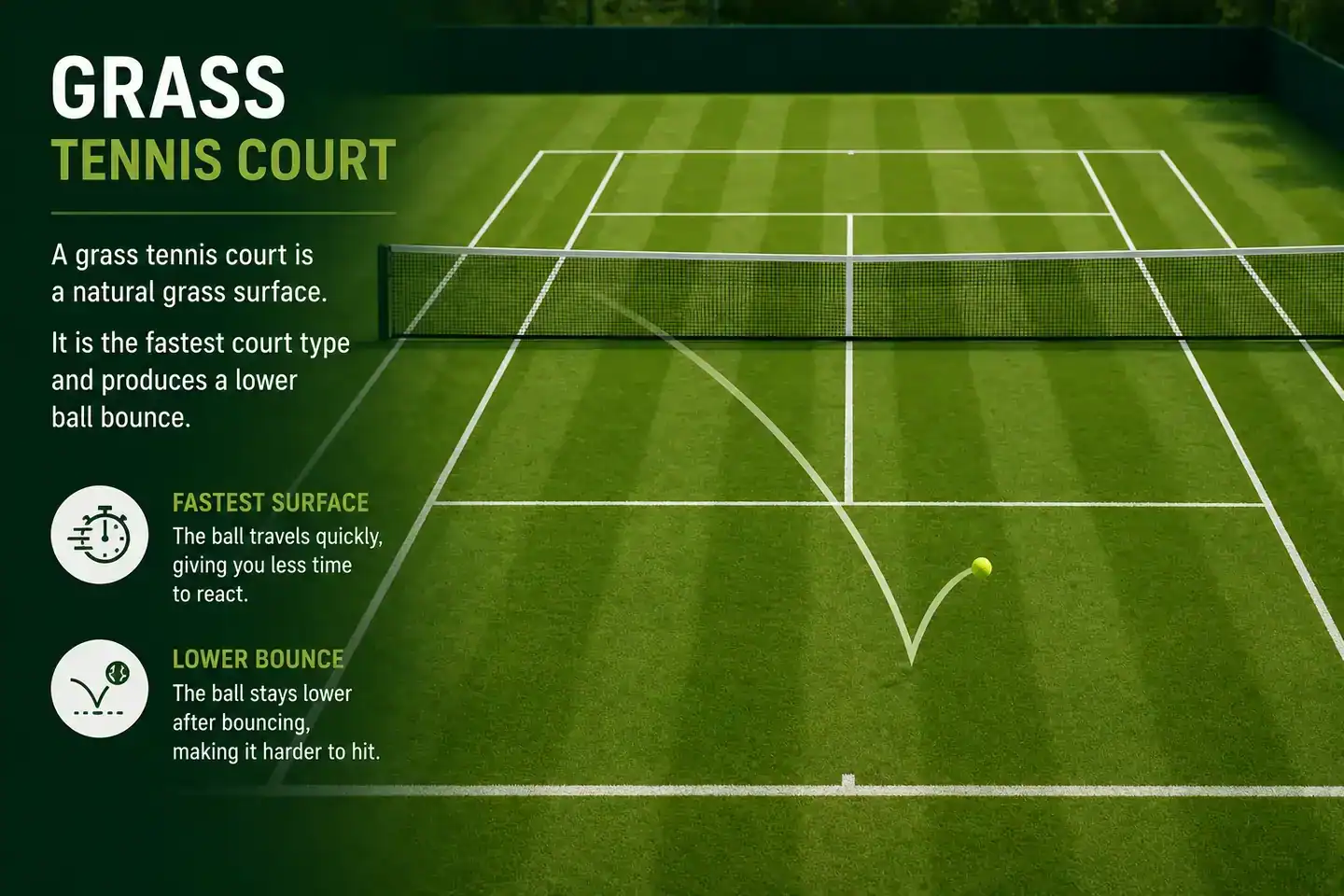
A grass tennis court is a natural grass surface. It is the fastest court type and produces a lower ball bounce.
Indoor Tennis Court
An indoor tennis court is played inside a building, where weather conditions do not affect play. Indoor courts are usually hard or carpet courts.
Outdoor Tennis Court
An outdoor tennis court is exposed to weather conditions such as wind and sunlight. It can have different playing surfaces, including hard, clay, or grass.
Carpet Tennis Court
A carpet tennis court uses a removable textile surface. It usually provides a faster playing speed than clay courts.
Artificial Grass Tennis Court
An artificial grass tennis court uses a synthetic grass surface instead of natural grass. It offers a lower bounce and faster play than clay courts.
Betting is only available to participants above 18 years. Please bet responsibly. BeGambleAware.org