
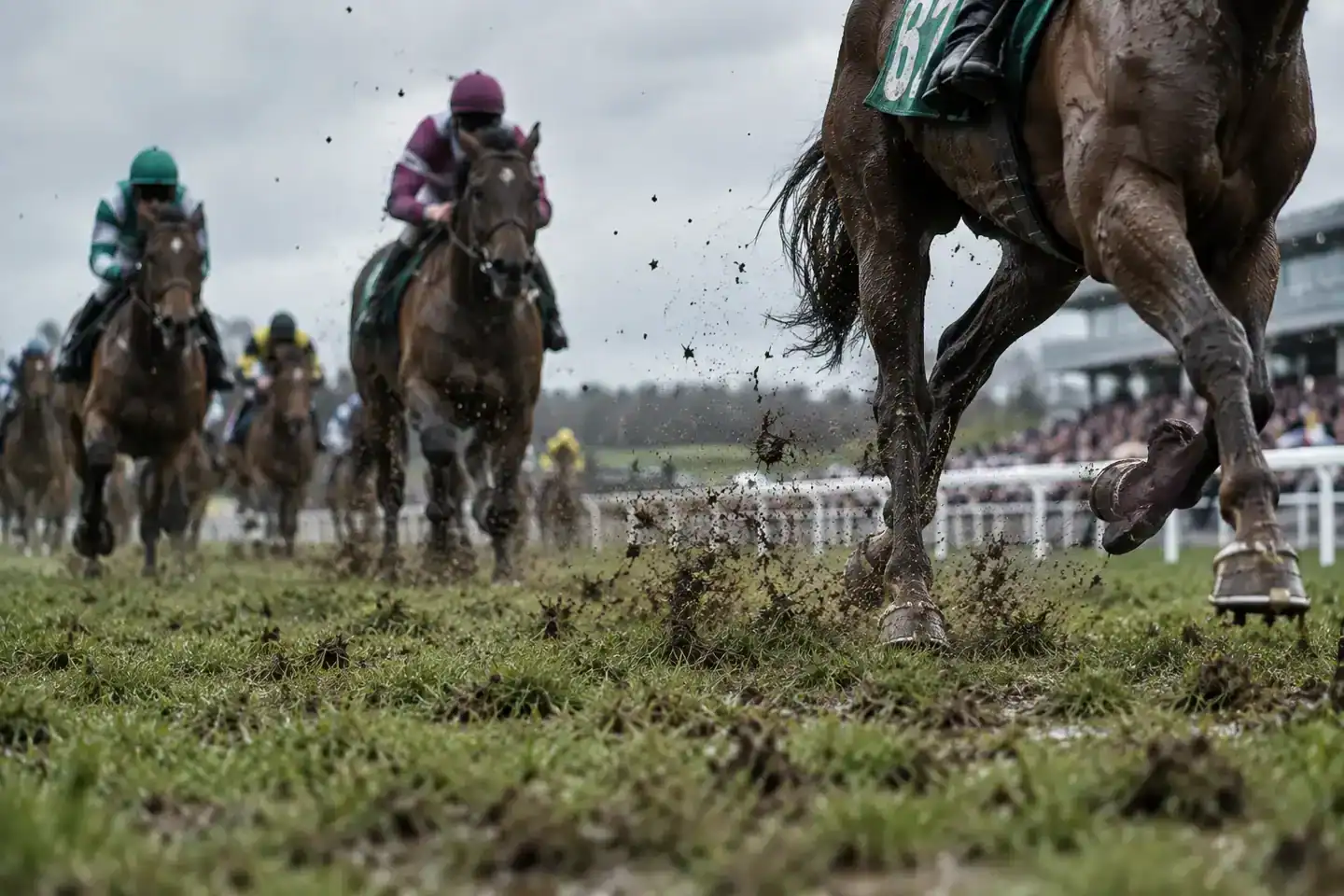


Yielding describes a turf racing surface that has a noticeable give underfoot. The term is used particularly in Irish horse racing and, in broad terms, is commonly compared with good to soft ground in Britain, an equivalence noted by both BBC Sport and Racing Post. In racing, “going” refers to how firm or soft the ground is on the day. This article explains what is yielding ground in horse racing, where it sits on the going scale, why it occurs, how it differs from other conditions, and why going matters.
What Does Yielding Mean in Horse Racing?
In horse racing, “yielding” is a specific description of going on a turf racecourse. It indicates that the surface contains enough moisture to have some give when horses travel over it. The ground is softer than genuinely good conditions but is not normally as testing as deeper soft or heavy going. It usually occurs after rain, but track watering and drainage can also affect how much water remains on the surface on a given day. The term is associated particularly with Irish racing, where it appears regularly on racecards and in official going reports.
In British terminology, yielding is generally compared with good to soft. The description can also change during a meeting if weather or track maintenance alters conditions further. To understand what is yielding ground, it helps to recognise that “going” itself refers to the physical condition of the racing surface rather than weather alone.
While rainfall is the primary driver, drainage, soil composition and previous weather patterns all influence the final going description. It is not useful to define yielding as one exact moisture level, because conditions vary significantly between racecourses depending on their location, turf type and drainage systems.
Where Does Yielding Sit on the Going Scale?
British and Irish going terminology is not identical, although it shares many broad similarities. Yielding occupies a specific place on the Irish scale that does not have a direct one‑to‑one equivalent in every British classification.
Yielding in Irish Racing
Irish racecards commonly use yielding as a standalone going description. It sits between firmer and softer descriptions, and variations such as good to yielding or yielding to soft may also appear where conditions fall between two clear classifications. These intermediate terms give a more precise picture of the surface without forcing a single label.
Yielding vs Good to Soft
British racing generally uses good to soft where Irish racing may use yielding. They are useful broad equivalents, but users should not assume that conditions at two different tracks are mechanically identical. Soil type, drainage and local weather can make two similarly described courses ride differently. The table below offers a simplified comparison of typical British and Irish going terms.
| Typical British term | Comparable Irish terminology |
| Good | Good / Good to Yielding |
| Good to Soft | Yielding |
| Soft | Yielding to Soft / Soft |
| Heavy | Heavy |
This table is an approximate comparison, not a strict conversion chart. It is important to treat these equivalences as guidance rather than fixed rules.
What Causes Yielding Ground?
Rain is the most common reason turf moves from good toward yielding conditions. However, watering can also affect ground moisture, and the final going depends on more than just rainfall totals. Several factors influence whether a track becomes yielding, including:
- soil type;
- drainage capacity;
- temperature and wind;
- recent weather patterns;
- previous racing on the surface.
The clerk of the course is responsible for assessing and publishing the official going description, often after inspecting the track on the morning of racing. Conditions can change between declarations and race time if weather alters. Understanding what is yielding ground in horse racing means recognising that it is a dynamic description: the same course can move between good, yielding and softer states over a single meeting depending on rain or drying conditions. As BBC Sport notes, going depends on moisture but also on factors such as soil structure and soil type.
How Does Yielding Ground Affect a Horse Race?
Yielding turf generally provides more give than firmer ground, which can influence how a race unfolds. Horses may travel more slowly on yielding conditions than on good‑to‑firm or firm ground, and the surface can require more effort to maintain speed. However, individual horses can respond differently to softer surfaces. Some racehorses act well on ground with some give, while others are less effective.
Previous performance on similar going can provide historical context, but it does not guarantee the same outcome on a different day or at a different course. Distance and race type also matter when assessing how strongly the surface may influence a race. The going can affect race pace, finishing times, how easily horses maintain their speed through the final stages, and how physically demanding the race becomes. The key point is that the surface adds a variable that is real but not predictable in a uniform way. It is not possible to state that yielding always favours a particular type of horse, because the effect depends on the individual, the course and the specific race conditions.
Yielding vs Soft and Heavy Ground
Distinguishing between yielding, soft and heavy ground helps users understand the going scale more clearly.
Yielding vs Soft
Soft ground generally contains more moisture and is more testing than yielding. Horses tend to sink further into softer turf and may expend more energy maintaining their speed. “Yielding to soft” indicates conditions between the two descriptions, offering a transitional label.
Yielding vs Heavy
Heavy is at the wetter and more testing end of the turf going scale. It generally contains considerably more moisture than yielding ground. Heavy ground generally produces slower race times and requires more effort from horses than yielding ground.
A simplified Irish‑style progression from driest to wettest is:
Good → Yielding → Soft → Heavy
Intermediate descriptions such as good to yielding and yielding to soft are also used. This progression helps frame yielding ground relative to the wider going spectrum.
Frequently Asked Questions About Yielding Ground
Is yielding the same as good to soft?
Broadly, yes: yielding in Irish racing is commonly compared with British good to soft, though exact conditions may differ between courses.
Is yielding softer than good ground?
Yes. Yielding indicates more give in the turf than good ground.
Is yielding softer than soft ground?
No. Soft is generally more testing and contains more moisture.
Is yielding used in British horse racing?
It is principally an Irish going term. Britain normally uses good to soft instead, although the terms are often treated as comparable.
Can yielding ground change during the day?
Yes. Rainfall, drying conditions and the action of racing itself can all affect the surface throughout a meeting.
Betting is only available to participants above 18 years. Please bet responsibly. BeGambleAware.org