
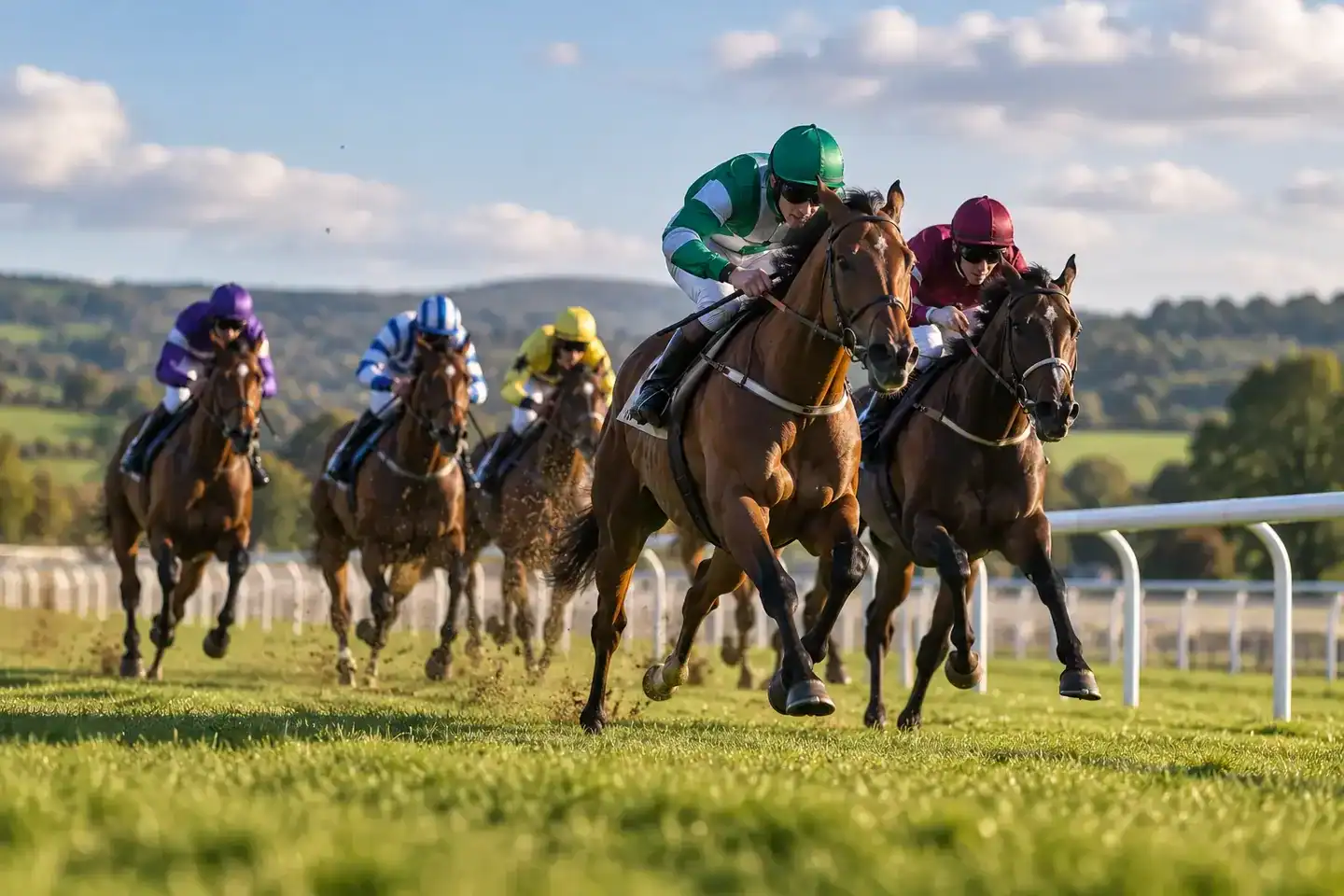


The UK racing calendar runs all year round and includes both Flat and National Hunt codes. These fixtures include plenty of prestigious spring festivals. The calendar draws top trainers, jockeys and horses from both Britain and Ireland. Some meetings are best known for a single feature race, while others contain several important contests across multiple days. Major examples of big horse racing events are the Grand National, Cheltenham Gold Cup, the Derby, Royal Ascot, 2,000 Guineas and King George VI and Queen Elizabeth Stakes. They showcase the depth and history of great British horse racing. This guide covers the biggest horse races in the UK. It explains where and when they take place, and whether they are Flat or jumps events.
What Are the Biggest Horse Races in the UK?
There is no single official ranking of the biggest horse races in the UK. Prominence is generally considered through factors such as history and tradition, the quality of horses entered, race classification (Grade 1, Group 1, or heritage handicaps), prize money, attendance, television audience, and international recognition.
The sport’s prestige is also shaped by consistent media coverage, iconic course settings, and the presence of champion horses, trainers, and jockeys. These elements help distinguish the most celebrated fixtures from the wider calendar and explain why certain races remain globally recognised. They also highlight the enduring global appeal of these big horse racing events.
The following table introduces the main races and events covered in this guide:
| Race/Event | Racecourse | Type |
| Grand National | Aintree | National Hunt |
| Cheltenham Gold Cup | Cheltenham | National Hunt |
| Champion Hurdle | Cheltenham | National Hunt |
| The Derby | Epsom Downs | Flat |
| 2,000 Guineas | Newmarket | Flat |
| Royal Ascot | Ascot | Flat meeting |
| King George VI and Queen Elizabeth Stakes | Ascot | Flat |
| St Leger | Doncaster | Flat |
Royal Ascot is a multi-day meeting rather than a single race. The British Horseracing Authority (BHA) identifies festivals such as the Grand National meeting, Derby, Royal Ascot, Glorious Goodwood, and the Ebor Festival among the sport’s major events. These big horse racing events attract fields from multiple countries and are central to the British racing identity.
The Grand National
The Grand National is one of the biggest horse races in the UK. It is held at Aintree Racecourse near Liverpool and is one of Britain’s best-known National Hunt races. It is a steeplechase run over the famous Grand National course, featuring distinctive fences such as Becher’s Brook and The Chair. The race is the centrepiece of the three-day Grand National Festival, which takes place each April. With a long history dating back to 1839, the Grand National stands apart from standard chase races because of its unique course configuration, extended distance of about four and a quarter miles, and a maximum field of 34 runners.
Its national and international profile is substantial, with audiences around the world tuning in annually for one of the big horse racing events. The Jockey Club describes the Grand National as its famous steeplechase and a major event with a global audience. While many consider it the biggest horse race in the UK in terms of public recognition, its handicapping system and challenging obstacles make it distinctly different from other Grade 1 contests. The race is known for its demanding fences, long history and wide following, which have made it a fixture of British sporting culture each spring. A blend of spectacle, risk, and tradition keeps it central to British racing today.
Cheltenham Gold Cup
The Cheltenham Gold Cup is the headline race of the Cheltenham Festival, held at Cheltenham Racecourse in Gloucestershire. It is a Grade 1 steeplechase run over three miles, two furlongs and 70 yards and traditionally takes place on the final day of the four-day festival. The Gold Cup is one of the major championship races in National Hunt racing, often seen as the ultimate test for staying chasers.
The Cheltenham Festival itself features several other Grade 1 races, including the Champion Hurdle and Queen Mother Champion Chase, but the Gold Cup remains the festival’s premier event. The Jockey Club describes the Cheltenham Festival as a pinnacle event of the jump-racing calendar. Distinguishing the Gold Cup from the festival as a whole is important, as the meeting includes many other major horse races that UK racing fans follow closely. The race demands speed, stamina and precise jumping, and has been won by many of the sport’s best-known chasers. It attracts leading staying chasers from Britain, Ireland and further afield, drawing large crowds to Prestbury Park each March.
The Derby at Epsom
The Derby is held at Epsom Downs in Surrey and is one of Britain’s five Classic races and one of the big horse racing events. Restricted to three-year-old thoroughbreds, it is run over a distance of one mile, four furlongs and six yards on the Flat. The race takes place during the Derby Festival, usually on the first Saturday in June.
The Epsom course provides a distinctive test because of its undulating layout, cambered turns, and downhill run into Tattenham Corner. The Derby carries significant importance within British Flat racing and has influenced the naming and structure of Derby races in countries such as Ireland, the United States, and Japan.
The Jockey Club identifies the Derby Festival as one of Britain’s major racing festivals. As one of the biggest Flat races in the UK, it consistently attracts the best three-year-old colts and fillies from Europe and beyond. Winning the Derby is a significant achievement for owners, breeders, trainers and jockeys, and the race attracts large crowds to Epsom Downs each year. It also plays a role in shaping Thoroughbred bloodlines, with many winners going on to stand at stud.
Royal Ascot
Royal Ascot is a major race meeting rather than a single race. Held at Ascot Racecourse in Berkshire, Royal Ascot runs over five days in June and contains numerous high-level Flat races, including Group 1, Group 2, Group 3 and Listed contests, as well as several major handicaps. The meeting is attended by members of the Royal Family and retains a formal dress code, contributing to its unique character.
Important races held during the Royal Ascot meeting include the Queen Anne Stakes (a Group 1 mile race), the King Charles III Stakes (Group 1 sprint), the Prince of Wales’s Stakes (Group 1 for middle-distance horses), the Gold Cup (Group 1 staying contest over two and a half miles), the Commonwealth Cup (Group 1 sprint for three-year-olds), and the Queen Elizabeth II Jubilee Stakes (Group 1 sprint).
Horses from outside Britain regularly compete at the meeting, underlining its importance within the international Flat racing calendar. Note that the Ascot Gold Cup is a Flat race and should not be confused with the Cheltenham Gold Cup, which is a jumps race. Royal Ascot is routinely listed among the biggest horse racing events in the UK due to its quality, prize money, and global broadcast reach. Its combination of top-level racing, pageantry, fashion and tradition makes it a distinctive fixture in the sporting and social calendar each summer.
The 2,000 Guineas and 1,000 Guineas
Both the 2,000 Guineas and the 1,000 Guineas are held at Newmarket Racecourse in Suffolk. They are British Classic races and take place in late April or early May, marking the first Classics of the Flat season.
The 2,000 Guineas is run over one mile and is open to both colts and fillies, while the 1,000 Guineas is restricted to fillies only. Both races are contested by three-year-olds and are run on the Rowley Mile course. Their position early in the season means they often influence subsequent Classic campaigns, including the Derby and the Oaks, as horses use these trials to build towards longer distances.
Historical detail aside, these two Classics remain central to the early Flat calendar and are among the premier mile tests for their age group. Victory in either Guineas can be significant for a horse’s later career and its value at stud, which makes these races important for owners and breeders. Newmarket draws strong crowds for the occasion each year.
Other Major Horse Races in the UK
Beyond the headline festivals, the UK hosts numerous other significant contests that shape the season. These races span both codes and offer championship opportunities and valuable prize money throughout the year. From prestigious hurdles and staying chases to high-class Flat miles and end-of-season middle-distance showdowns, they ensure top-level racing remains throughout the year across Britain’s leading racecourses for dedicated racing fans.
Champion Hurdle
A Grade 1 hurdle race held at Cheltenham during the Cheltenham Festival. It is one of the major championship races in the National Hunt division, run over two miles and half a furlong.
King George VI and Queen Elizabeth Stakes
A major Flat race held at Ascot in July. It brings together leading middle-distance horses, including older horses and three-year-olds, over one mile and four furlongs.
St Leger Stakes
Held at Doncaster in September, this is Britain’s oldest Classic and traditionally the final Classic of the season. It is run over one mile, six furlongs and 115 yards for three-year-olds.
Sussex Stakes
Held at Goodwood during the major summer meeting commonly known as Glorious Goodwood. This Group 1 mile race is a key contest for older horses and three-year-olds.
Ebor Handicap
Held at York in August as the headline handicap of the Ebor Festival. It is run over one mile and six furlongs and often features a large field of high-quality handicappers.
Champion Stakes
Held at Ascot as part of British Champions Day in October. This Group 1 contest over one mile and two furlongs is a major end-of-season Flat race for three-year-olds and older horses.
The BHA specifically lists the Derby, Royal Ascot, Glorious Goodwood, and the Ebor Festival among Britain’s major festival races.
Flat Racing vs National Hunt: Where the Major Races Fit
Flat races contain no obstacles and are on turf or all-weather surfaces over distances of five furlongs to over two miles. National Hunt racing includes hurdles and steeplechases, and these races tend to be run over longer distances and at lower average speeds.
Major Flat Races
Examples include the Derby, 2,000 Guineas, 1,000 Guineas, the races at Royal Ascot, the St Leger, and the King George VI and Queen Elizabeth Stakes. These form the backbone of the British Classic and Group race system.
Major National Hunt Races
Examples include the Grand National, the Cheltenham Gold Cup, and the Champion Hurdle. These are premier events in the jumps calendar, with the Cheltenham Festival serving as the season’s showcase.
Understanding this distinction helps explain why comparing events purely by distance or race structure is not always useful. The two codes operate on different schedules, with National Hunt racing peaking in winter and spring, while Flat racing runs from spring to autumn.
When Do the Biggest UK Horse Racing Events Take Place?
Exact dates vary each year and should be checked against the official racing calendar. The following table provides a general seasonal guide:
| Period | Major Events |
| March | Cheltenham Festival |
| April | Grand National Festival |
| May | Guineas Meeting at Newmarket |
| June | Derby Festival, Royal Ascot |
| July | Major meetings at Goodwood and Ascot |
| August | Ebor Festival at York |
| September | St Leger at Doncaster |
| October | British Champions Day at Ascot |
This calendar covers the majority of the biggest horse races in the UK, offering a structure that fans and casual viewers alike can follow throughout the year. For precise dates, always refer to the BHA’s published fixture list or the individual racecourse websites.
Betting is only available to participants above 18 years. Please bet responsibly. BeGambleAware.org