
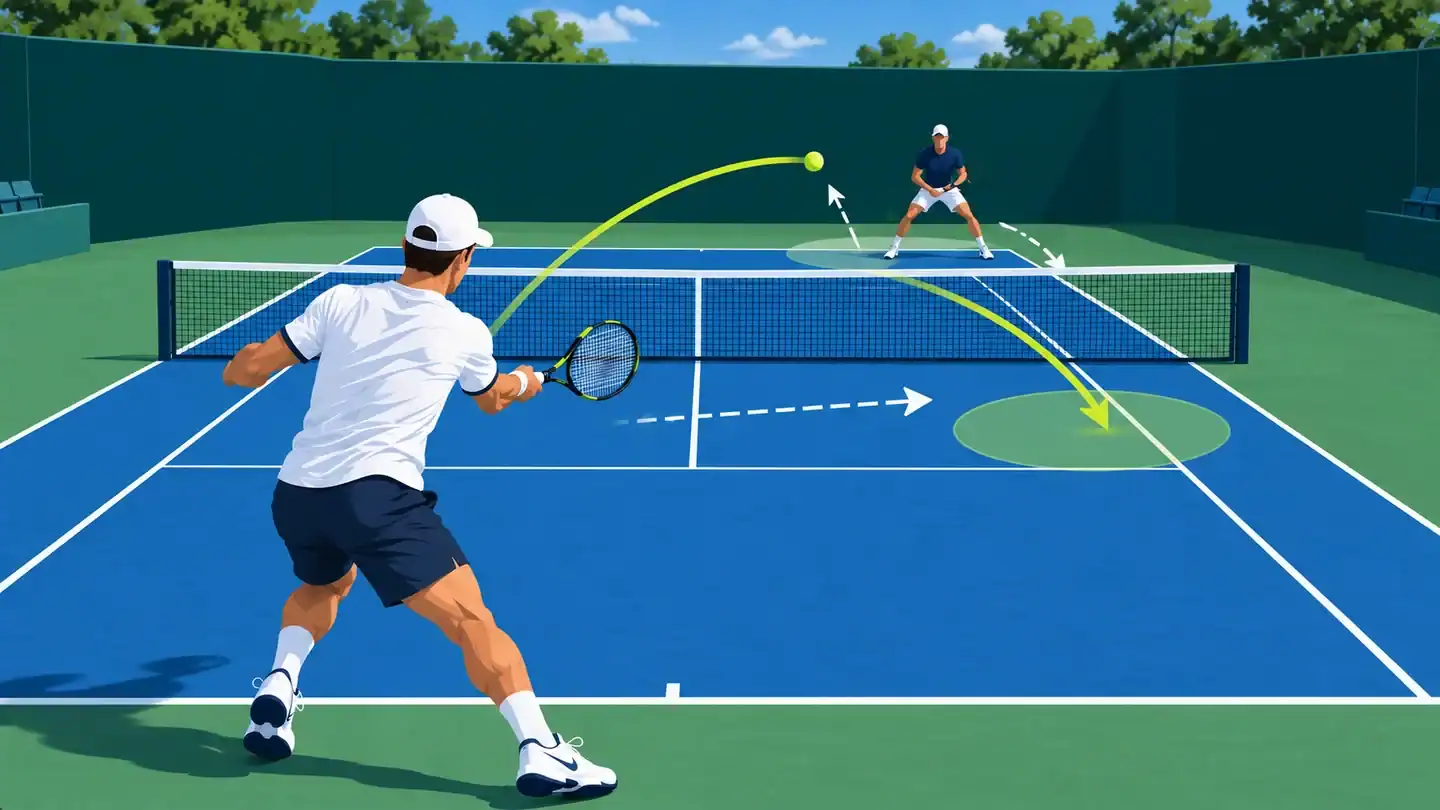


Tennis strategy includes the plans, decisions, and patterns players use during a match. This glossary explains common tennis strategy terms, from point construction and court positioning to serving and returning tactics.
Game Plan in Tennis
A game plan in tennis is the overall approach a player intends to use during a match. It can be based on their own strengths, the opponent’s weaknesses, and the match conditions.
Pattern of Play in Tennis
A pattern of play in tennis is a sequence of shots or movements used to build a point. Players may repeat successful patterns during a match.
Point Construction in Tennis
Point construction in tennis is the process of using several shots to create an advantage. A player may move the opponent, create space, and then attack the open court.
Percentage Tennis
Percentage tennis is an approach based on choosing shots with a higher chance of success. It often means using safer targets and avoiding unnecessary risk.
Shot Selection in Tennis
Shot selection in tennis is the choice of which shot to play in a specific situation. It can depend on court position, the opponent’s position, and the type of incoming ball.
Court Positioning in Tennis
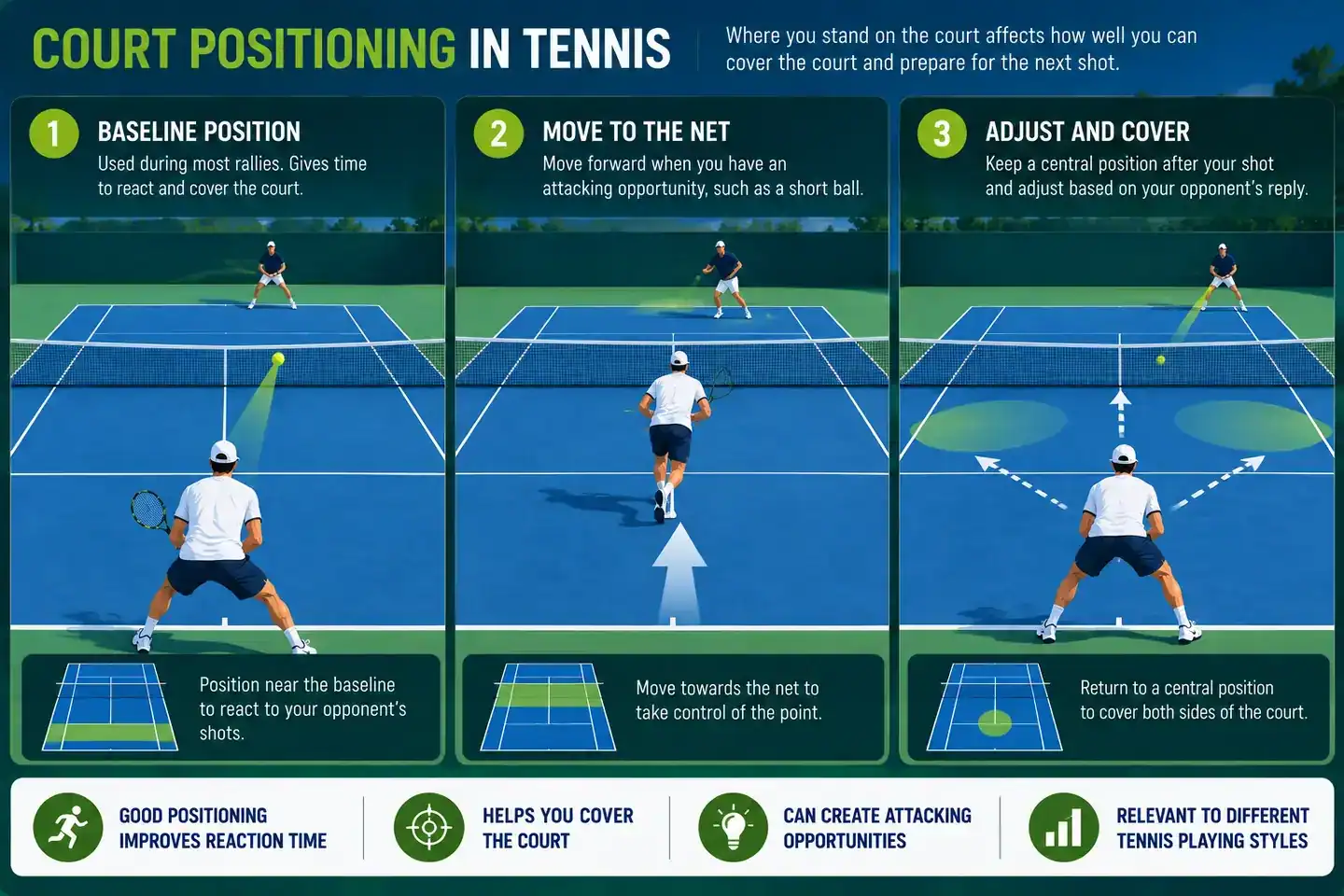
Court positioning in tennis refers to where a player stands or moves during a point. Good positioning can help a player cover the court and prepare for the next shot.
Change of Pace in Tennis
A change of pace in tennis means changing the speed of the ball during a rally. Players can use it to alter the rhythm of a point.
Attacking Tennis
Attacking tennis is an approach focused on taking control of the point. A player may use aggressive groundstrokes, approach shots, or net play to put the opponent under pressure.
Defensive Tennis
Defensive tennis focuses on staying in the point when an opponent is attacking. Players often use movement, consistency, and controlled shots to recover their court position.
Transition Game in Tennis
The transition game in tennis describes how a player moves from baseline play towards the net. It often begins when a shorter ball creates an opportunity to move forward.
Chip and Charge in Tennis
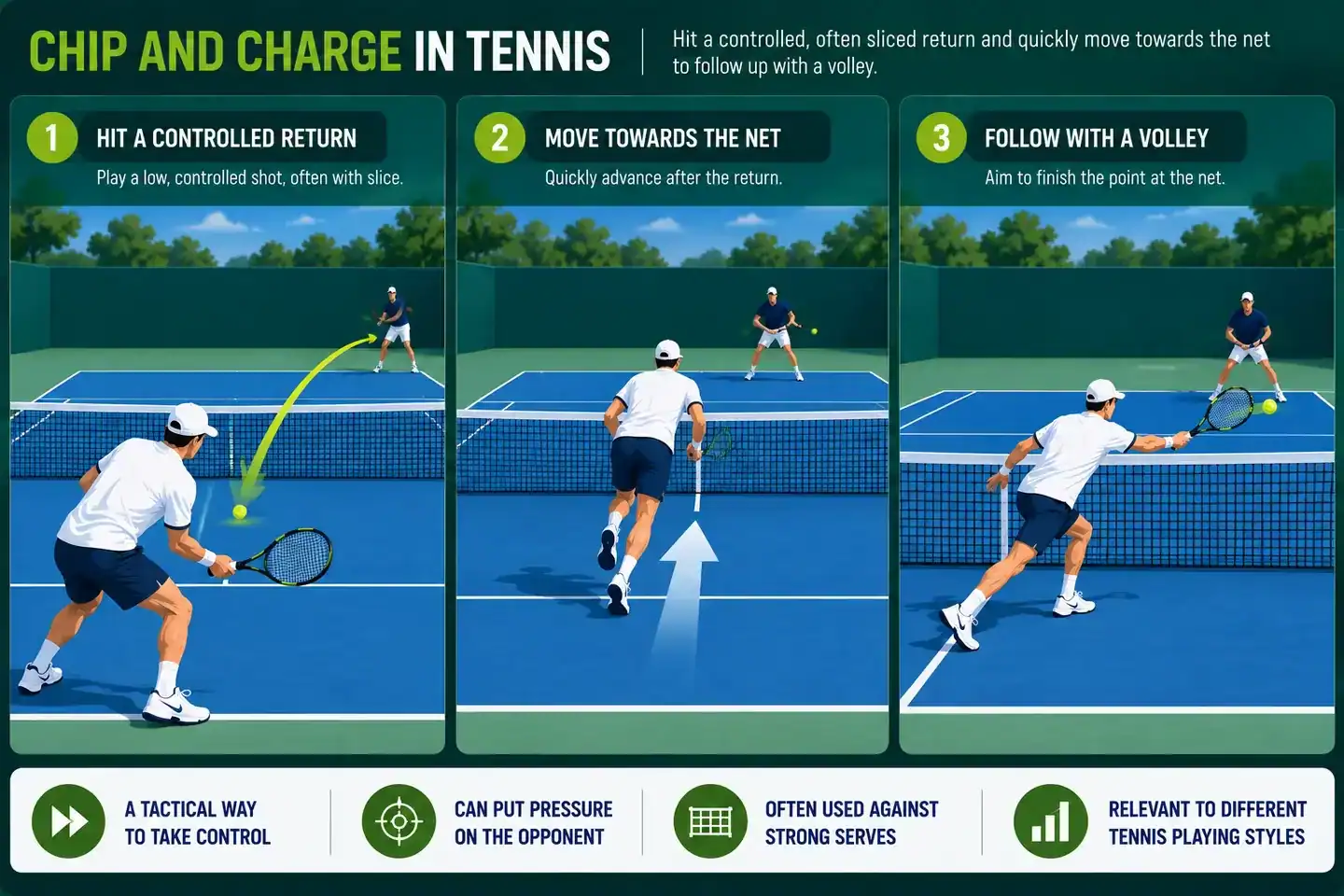
Chip and charge in tennis is a tactic where a player hits a controlled, often sliced return and quickly moves towards the net. The aim is to follow the return with a volley.
Poaching in Tennis
Poaching in tennis is a doubles tactic where the net player moves across the court to intercept a ball intended for their partner. The player usually tries to finish the point with a volley.
Australian Formation in Tennis
Australian formation in tennis is a doubles formation where the server and their partner begin on the same side of the centre line. It can be used to change the receiver’s usual return angles.
I-Formation in Tennis
I-formation in tennis is a doubles serving formation where the net player starts close to the centre service line. After the serve, the players move to cover different sides of the court.
Run Around Forehand in Tennis
A run around forehand in tennis occurs when a player moves around a ball that could be hit with a backhand and uses a forehand instead. This allows the player to use their forehand from the backhand side of the court.
Serve Plus One in Tennis
Serve plus one in tennis is a pattern based on the serve and the server’s first shot after the return. The serve is used to set up the next shot and gain control of the point.
Return Positioning in Tennis
Return positioning in tennis refers to where the receiver stands before and during the opponent’s serve. Players can move closer to or further behind the baseline depending on the serve and their return strategy.
Serving to the Backhand in Tennis
Serving to the backhand in tennis means directing the serve towards the receiver’s backhand side. Players may use this tactic when they want to test that side or create a specific pattern for the next shot.
Attacking the Second Serve in Tennis
Attacking the second serve in tennis means using a more aggressive return against an opponent’s second serve. The receiver may move forward or take the ball earlier to put pressure on the server.
Different strategies can affect how points, games, and sets develop. They can also provide useful context when looking at different tennis betting markets.
Betting is only available to participants above 18 years. Please bet responsibly. BeGambleAware.org