
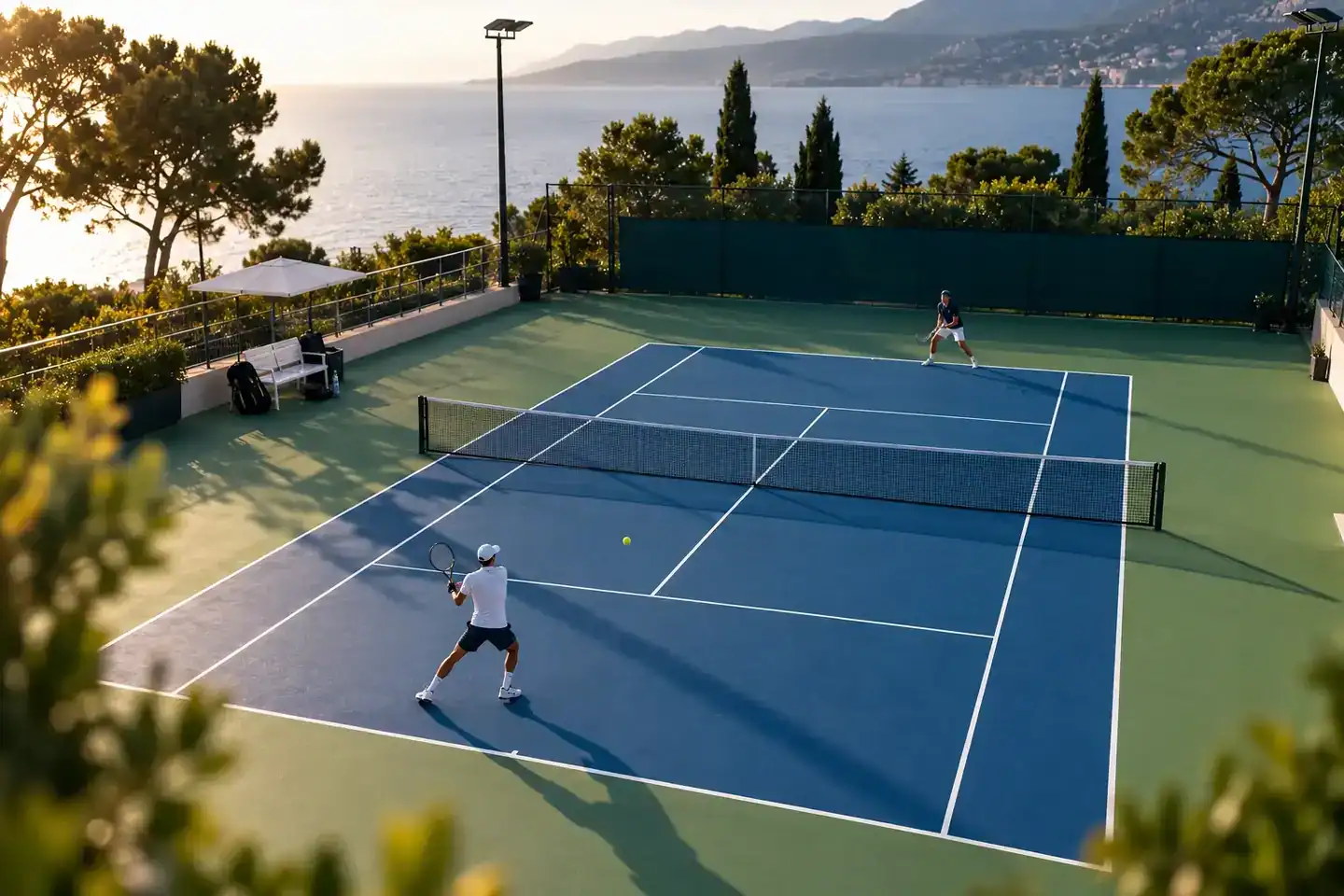


Tennis playing styles are the different approaches players use to win points. The style shapes the flow of the match and dictates how the action unfolds. The player’s style can dictate where they stand, how they react to different shots, how long rallies tend to run, and fallback tactics for when the pressure ramps up.
No two players can hit and play exactly the same way, but most will fall into one or more recognisable categories. If you understand them, you can read the match more easily, make more informed H2H predictions, and follow the tactics behind a rally. Sometimes the rankings might not reflect the closeness of a match or lack thereof, as much as style would.
What Are Tennis Playing Styles?
The best way to describe it would be an overall pattern that a player follows to build up momentum and win points. Style is shaped by 4 main elements:
- Physical and technical strengths
- Preferred court position (e.g. close to the baseline, near the net, or well behind the baseline)
- Typical shot selection
- Selected approach to attacking and defending during rallies
Styles are more like tendencies rather than rigid categories. For example, a player with a big serve and heavy forehand will lean naturally towards an aggressive game that’s baseline-dominated. On the other hand, a fast, defensive-minded athlete might utilise their movement and focus towards consistency to win points.
Most high-level players blend elements of multiple tennis playing styles. They can shift on demand, though success with different styles is affected by the aforementioned factors. That’s one of the key elements of winning games – playing in your preferred style and forcing your opponent into one that’s uncomfortable for them.
Main Tennis Playing Styles
Most often, 4 different styles are distinguished when players and/or commentators describe how someone plays. Let’s look at them one by one.
Aggressive Baseliner
This is the most common of the four in the modern game. These players will stay closer to the baseline and look to strike early, taking time away from the opponent. The goal of an aggressive baseliner is to dictate the point from the first exchange on.
Their groundstrokes — usually heavy topspin forehands and backhands — are hit with real pace and depth. That’s by design, as the aggressive baseliners will try to push opponents backwards or open up spaces for attack.
If someone is facing this style of play, expect short, high-intensity rallies, since the goal is usually to seize control and outduel quickly rather than allowing it to snowball into a longer exchange.
Notable Examples: Jannik Sinner, Carlos Alcaraz, Aryna Sabalenka, Alexander Zverev
Counterpuncher
This tennis playing style takes the exact opposite approach from the aggressive baseliner. Rather than forcing anything, counterpunchers prioritise defence and consistency, and they have great movement. They turn opponents’ pace, aggression and lack of precision against themselves.
Counterpunchers are typically superb retrievers, tracking down balls that would be winners against most. They can redirect them with precision and depth, which is what makes playing against a good counterpuncher so difficult. Patience is the weapon, as they can force an aggressive opponent into crucial faults and misjudges, breeding frustration.
Notable Examples: Novak Djokovic, Daniil Medvedev
Serve-and-Volley Player
This was the most dominant style in the past. However, serve-and-volley is far rarer today, but still appears, as some players tend to switch to it on faster surfaces. This type of play follows their own serve towards the net, aiming to finish quickly, hopefully with a volley before the returner settles in and it turns into a rally. It’s a high-risk, high-reward type of approach.
A well-placed serve and a confident first volley can end points quickly, but it also leaves plenty of exposure to lobs or well-struck passing shots.
Notable Examples: Maxime Cressy, Dustin Brown, on rare occasions – Carlos Alcaraz
All-Court Player
From the four, this is the most versatile style. It blends baseline play, tactical variety and net approaches depending on each rally and given point. Rather than committing to one plan, an all-court player will read the situation, the opponent’s position, quality and type of previous shot, surface and choose whether to grind from the baseline, get closer to the net, or mix in spin and slice shots to mess up the rhythm.
That adaptability and versatility is exactly what makes a great all-court player so difficult to prepare for and play against. No single pattern. Everything is decided on the spot.
Notable Examples: Karolina Muchova, Ons Jabeur, in particular conditions – Carlos Alcaraz and Jannik Sinner
How Playing Styles Shape a Tennis Match
When two contrasting tennis playing styles meet, the shape and tempo of the match can often change before the ball is even struck. Experts can anticipate what’s likely going to happen, too.
- Court positioning – an aggressive baseliner facing a serve-and-volley player will pull each other into very different areas. One looks to control the back, while the other seeks to move closer to the net at every chance.
- Rally length and tempo – if two aggressive baseliners come to blows, expect shorter, more explosive points. When two counterpunchers face one another, this can turn into a long, physical grind fest.
- Attacking vs defending patterns – more aggressive players will try to dictate when a point speeds up. On the other hand, a more defensive or counter-focused athlete will look to slow things down. It becomes somewhat of a tug-of-war between those instincts to see who comes out on top.
- Adjustments – strong players will be able to adjust their style, deviating from the default plan on demand. They adapt shot selection, pace and spin to specifically counter what the opponent’s style is trying to do. Really great players can look completely different from one match to the next.
How Court Surface Influences Playing Style
Besides the playing style of an opponent, the surface can also make a considerable difference to the game. One style can become considerably more effective on a particular court, and vice versa.
- Hard courts – middle ground between grass and clay. This is the most neutral surface, where you can expect the widest range of tennis playing styles competing on fairly even terms.
- Clay – the slowest surface, rewarding heavy topspin and physical rally play. This favours aggressive baseliners and counterpunchers and isn’t too kind to serve-and-volley.
- Grass – a fast, low-bounce surface, allowing serve-and-volley and aggressive, flatter-hitting styles to flourish. This is why athletes who aren’t afraid to come forward and finish quickly can outduel others on frequent occasions.
The surface is the reason why you have grass- or clay-only specialists. Their natural style is simply better suited for the given conditions.
Can Players Combine Different Tennis Playing Styles?
Yes, in the real world, only a few high-level athletes can be fitted into one style category. Playing styles should be viewed as tendency bundles and strength sets rather than strict limitations. Most pros blend elements of two or more and can change between sets, points or even mid-rally when needed, fluidly.
If you follow the sport closely, understanding playing styles can also sharpen how you read matchups on our tennis betting hub.
Betting is only available to participants above 18 years. Please bet responsibly. BeGambleAware.org