
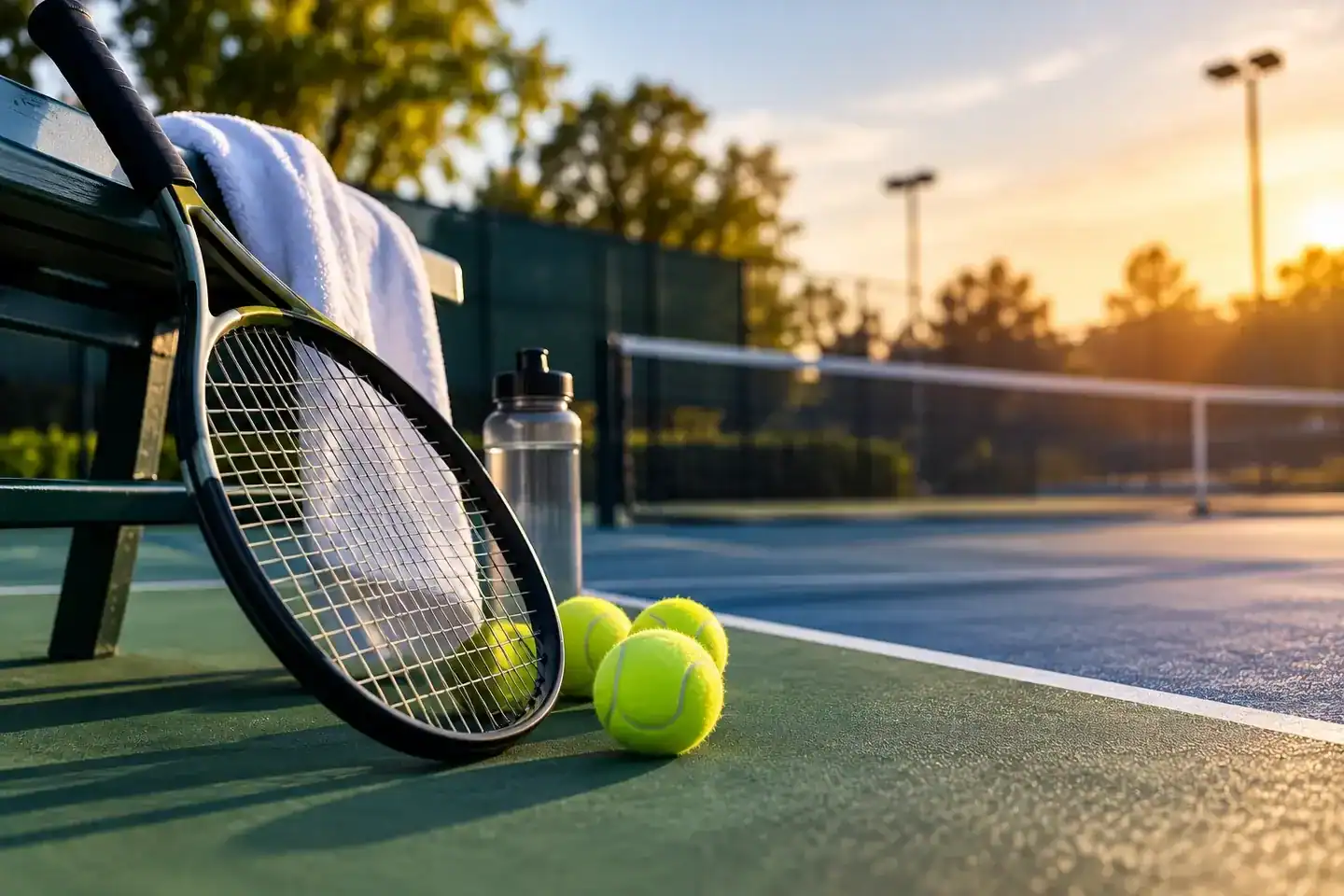


A proper tennis equipment list doesn’t need to be complicated. If you’re a beginner, you can get on the court with just four essentials: a racket, balls, tennis shoes and comfortable clothing. That’s all you need to hit your first ball and start learning the game.
Once you’re playing more regularly, though, a few extras are helpful. For example, a proper tennis bag, overgrips for the rackets, spare strings, and sun protection.
Read on below to find out the essential tennis equipment list you need to start and things that are worth adding later (accessories).
Essential Tennis Equipment List
| Equipment | Purpose |
| Tennis racket | Required to hit the ball. The right size, weight and grip affect how you control the ball. |
| Tennis balls | Multiple balls required for practice. Type of ball varies by skill. |
| Tennis shoes | These will give you grip and lateral support for quick, sideways movement. |
| Tennis clothing | Proper clothes are necessary for free movement and moisture control. |
Tennis Racket
A racket is the most essential part of your tennis equipment list. Your racket can vary by length, weight, head size and grip size. So, it’s important to understand what works for you before investing in one. Keep these factors in mind:
- Length: Adult rackets are around 27 inches, while kids’ rackets range from 19 to 26 inches depending on age and height.
- Weight: Beginners should go for lighter rackets (around 250-280g unstrung) as they are easier to swing and give a spin to the ball. Move to a heavier racket (300g+) once you’ve established your swing. Heavy rackets offer powerful serve.
- Head size: Larger heads (100 sq in or more) give you more room to hit, so they are a good choice for beginners. You will need a smaller head (95 sq in or less) for precision and control. This is suitable for advanced players.
- Grip size: This is usually labelled 0–5 (4 to 4⅝ inches). You will need some time to understand the correct size for you. Too small a grip can twist the racket on impact, whereas a large grip restricts wrist movement. Start with a small grip. You can always add an overgrip for more control.
- Strings and tension: Most new rackets are pre-strung. However, the string tension (how tight or loose it’s strung) can affect your game. Low tension (22 kg) gives more power, while higher tension (27 kg) gives more control. Beginners using pre-strung rackets rarely need to worry about this.
Pro tip: Invest in a racket from a specialist shop rather than a generic sports retailer. It is worth the cost as they will let you test a few models before committing.
Tennis Balls
If you are a beginner, you don’t need the standard yellow balls. They are pressurised and suit intermediate to advanced play. Beginners and juniors should start with slow, low-compression balls. These are usually red, orange, or green. These bounce low and travel less, which is good for practicing rallies. If you are buying for a child, start with foam balls, as they are the slowest.
Pressurised balls lose bounce over time (even if they are unopened). So, make sure to buy them in small batches. Consider practicing with pressureless balls first. They don’t go flat and cost less. The best option for ball machines.
Tennis Shoes
Regular trainers aren’t built for tennis as you need to stop-start and glide side-to-side. Proper Tennis shoes will give you lateral support to prevent ankle rolling.
Using wrong shoes for the surface increases the risk of slipping. The sole also wears out faster. You will need these soles depending on the court surface:
- Hard court: Durable, abrasion resistance soles.
- Clay court: Herringbone-pattern soles for grip.
- Grass court: Nubbed or pimpled soles for traction.
Tennis Clothing
Look for lightweight, breathable, moisture-wicking fabric. This won’t restrict your swing or overheat you during rallies. You will need a t-shirt with shorts or a skirt, and proper sports socks. A branded kit isn’t necessary to play well.
As for colours, white is best to stay cool on outdoor courts. Most clubs have their own dress code, which is worth checking beforehand.
Fun fact: Wimbledon requires an all-white dress code to hide sweat stains and maintain historical Victorian standards of propriety and elegance.
Useful Tennis Accessories
None of these are required to play Tennis, but they will make your regular play more comfortable:
- Tennis bag: For carrying your racket, balls and gear. Invest in it if you own more than one racket or play regularly during the week.
- Overgrips: This is a thin tape that wraps over the handle to improve grip and absorb sweat. It’s cheap and easy to replace. A good investment for daily players.
- Replacement strings: Strings lose tension and snap over time. If you play regularly, you will need to restring every few months.
- Water bottle: Tennis matches are long, so it is best to keep a water bottle with you to stay hydrated.
- Towel: For wiping sweat between points, and keeping your grip dry.
- Wristbands/headbands: To control sweat, especially if you play in a hot or humid condition.
- Hat/visor if you are playing outdoors.
- Racket dampener: It’s a small rubber piece inserted into the strings to reduce vibration and sound on contact. This is a minor comfort upgrade and doesn’t affect your game.
- Sunscreen for outdoor games.
What Tennis Equipment Do Beginners Need?
Beginners should keep it simple: a racket, tennis balls, suitable tennis shoes and comfortable sports clothing. That’s enough to start learning the game. Accessories like bags, overgrips and extra strings can come later when you start playing consistently. Always keep a water bottle and a hat handy if you play outdoors.
From Playing Tennis to Following the Sport
Knowing your tennis equipment list is just one part of getting into tennis. You can also learn about the sport by watching professional players. You will notice several details: why someone changes shoes between a clay and hard court event, or why a player restrings mid-match. It gives you a better eye for the sport, even if you’ve never picked up a racket at all. And if you want to stay purely on the watching side, you can dig deeper into the competition with our tennis betting options.
FAQ
What equipment do you need to play tennis?
At minimum, you’ll need a tennis racket, tennis balls, tennis shoes and comfortable sports clothing. Accessories like bags, overgrips and extra string are optional.
What tennis equipment does a beginner need?
Just the essentials like a racket, balls, tennis shoes and a sports outfit. If you are just starting out, choose a wide-head racket and slower, unpressurized balls.
Do you need tennis shoes to play tennis?
Not strictly, but they’re strongly recommended. You need to run and skid sideways in this game. Regular trainers will not give you that lateral support, which can increase your risk of injury.
What are the most important tennis accessories?
Beyond the essentials, you will need a water bottle, hat and sunscreen (for outdoor courts) and towel. Invest in a tennis bag if you use multiple rackets.
Betting is only available to participants above 18 years. Please bet responsibly. BeGambleAware.org