
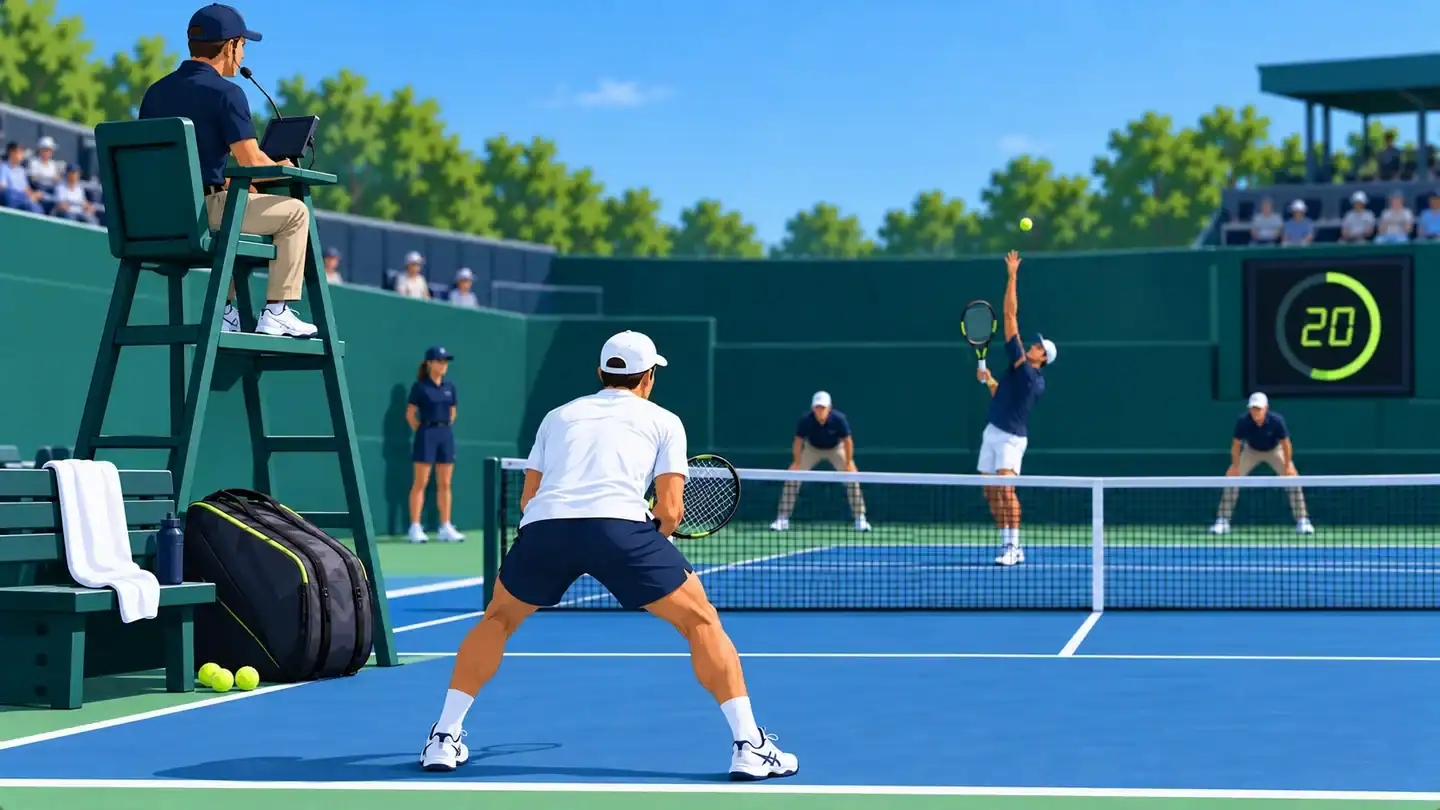


Tennis matches follow a set of rules and officiating procedures. Officials, line calls, penalties, breaks, and match interruptions can all affect how a match develops. This guide explains common tennis rules and officiating terms with clear definitions and practical examples.
Chair Umpire in Tennis
A chair umpire in tennis is the official responsible for controlling a match from the umpire’s chair. They announce the score, apply the rules, and make decisions during play.
Practical example: If there is a dispute during a match, the chair umpire can explain the decision and apply the relevant rule.
Tennis Referee
A referee in tennis oversees the application of rules across a tournament or competition. Their role is broader than that of the chair umpire, who manages an individual match.
Practical example: A referee may decide whether play should be suspended because court conditions are unsafe.
Line Umpire in Tennis
A line umpire in tennis is an official who judges whether balls land in or out around assigned court lines. Electronic systems have replaced line umpires at some professional events.
Practical example: If a ball lands outside the assigned line, the line umpire calls it out.
Line Call in Tennis
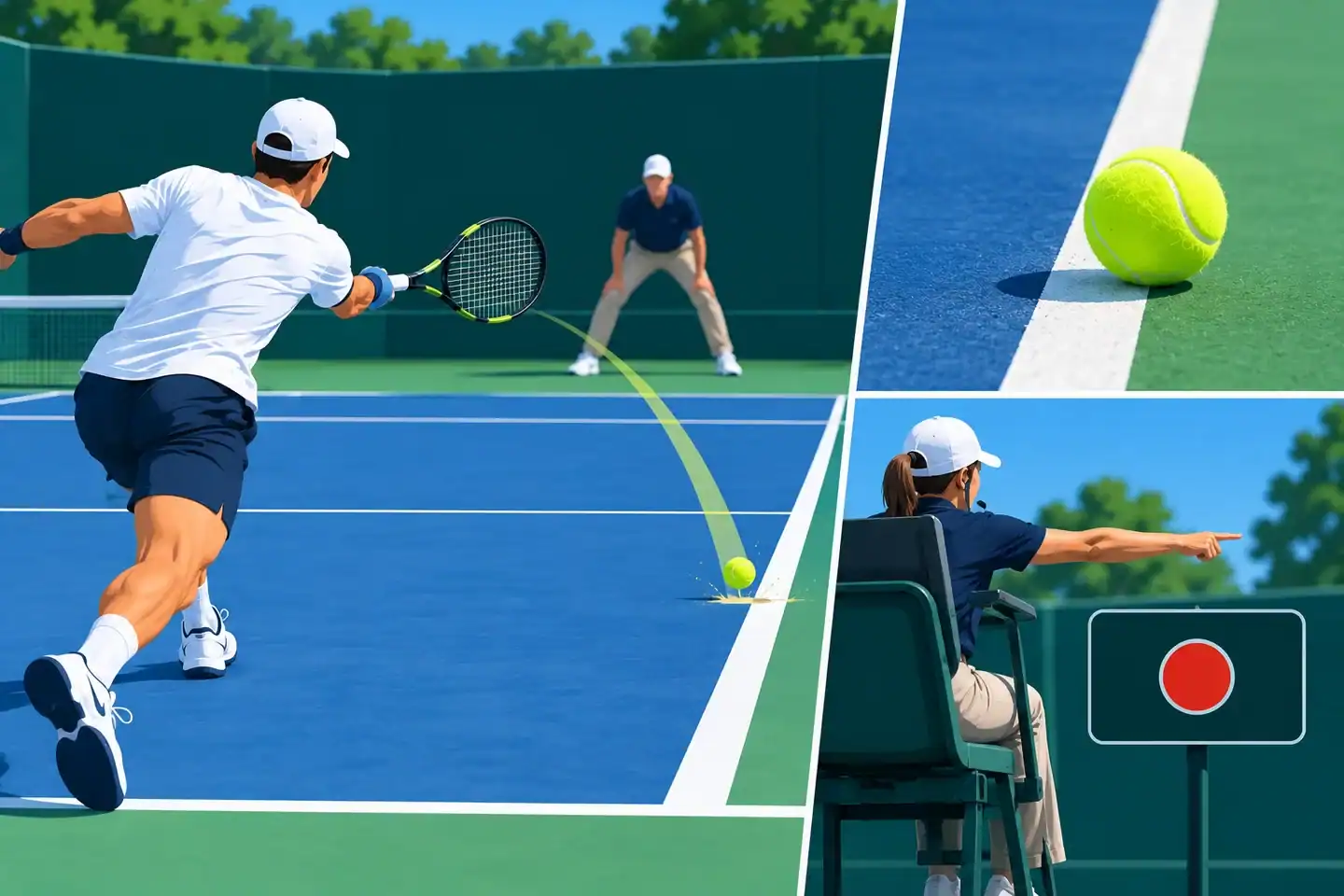
A line call in tennis is a decision on whether a ball has landed in or out. It can be made by an official or an electronic line-calling system.
Practical example: A forehand lands just beyond the baseline and is called out, ending the point.
Electronic Line Calling in Tennis
Electronic line calling in tennis uses technology to determine whether a ball lands in or out. Systems can provide line decisions without relying solely on human line officials.
Practical example: A serve lands close to the service line and the electronic system automatically determines whether it was in or out.
Challenge in Tennis
A challenge in tennis is a request to review a line call using an approved electronic system. Challenge systems are used at events where the relevant review format is available.
Practical example: A player believes a ball called out touched the line and requests a review of the call.
Let in Tennis
A let in tennis means that a serve or point must be replayed in certain situations. A service let can occur when the serve touches the net and still lands in the correct service box.
Practical example: A serve clips the net and lands inside the correct service box. The serve is taken again.
Foot Fault in Tennis
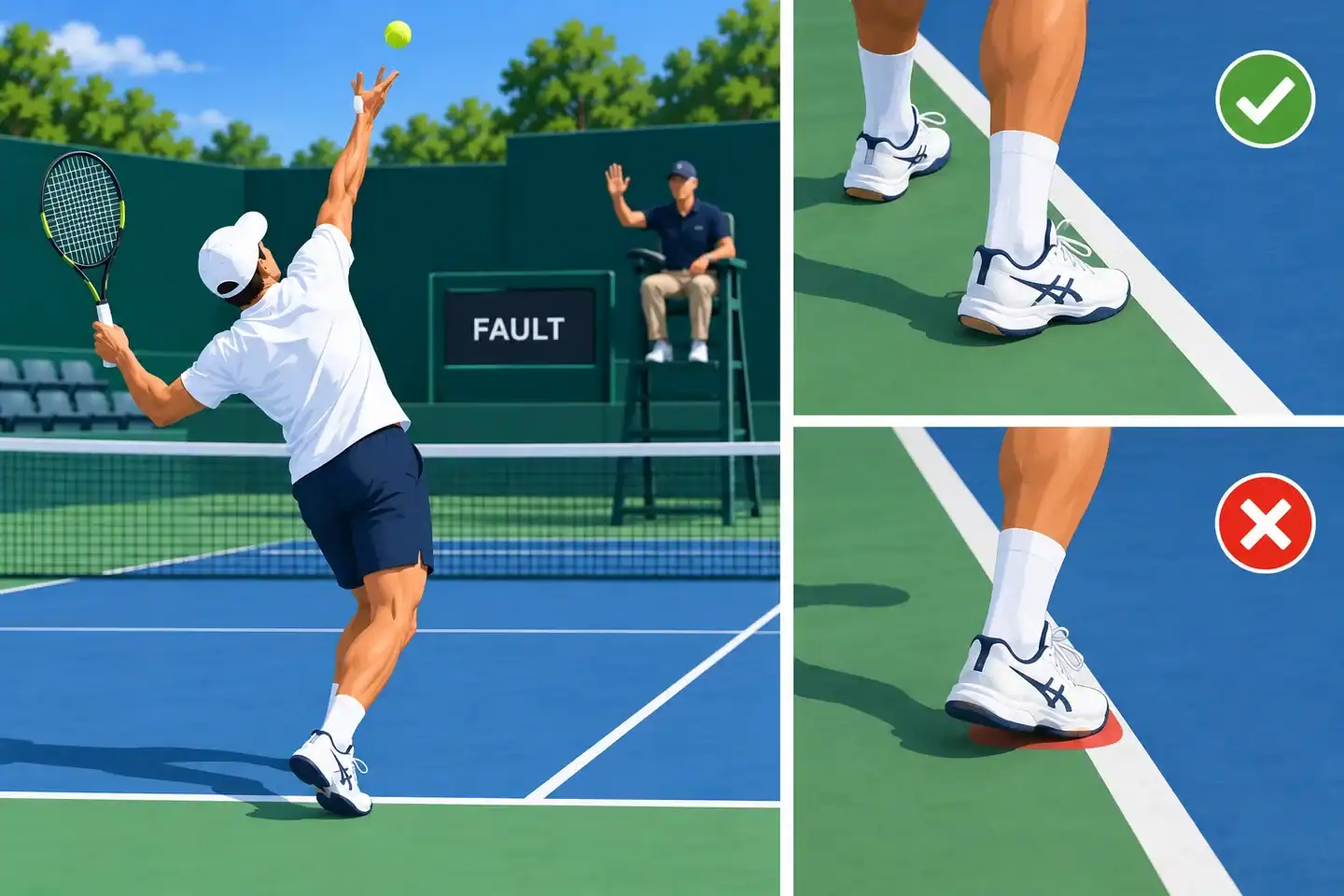
A foot fault in tennis occurs when the server breaks the rules governing foot position during the service motion. It counts as a service fault.
Practical example: A server touches the baseline with their foot before striking the ball. A foot fault is called.
Hindrance in Tennis
A hindrance in tennis occurs when something interferes with a player’s ability to play a point. The outcome depends on what caused the interruption and whether it was deliberate.
Practical example: If an unexpected event outside the players’ control interrupts a point, the chair umpire may order the point to be replayed.
Changeover in Tennis
A changeover in tennis is the break when players change ends of the court at designated points during a match. Players can use this time to rest, drink, and prepare for the next game.
Practical example: After the third game of a set, the players change ends and take the permitted changeover break.
Medical Time-Out in Tennis
A medical time-out in tennis is an authorised break for the assessment and treatment of an eligible medical condition. Under current ITF officiating procedures, an authorised medical time-out provides three minutes for treatment.
Practical example: A player develops a treatable physical problem and receives an authorised medical time-out during the match.
Shot Clock in Tennis
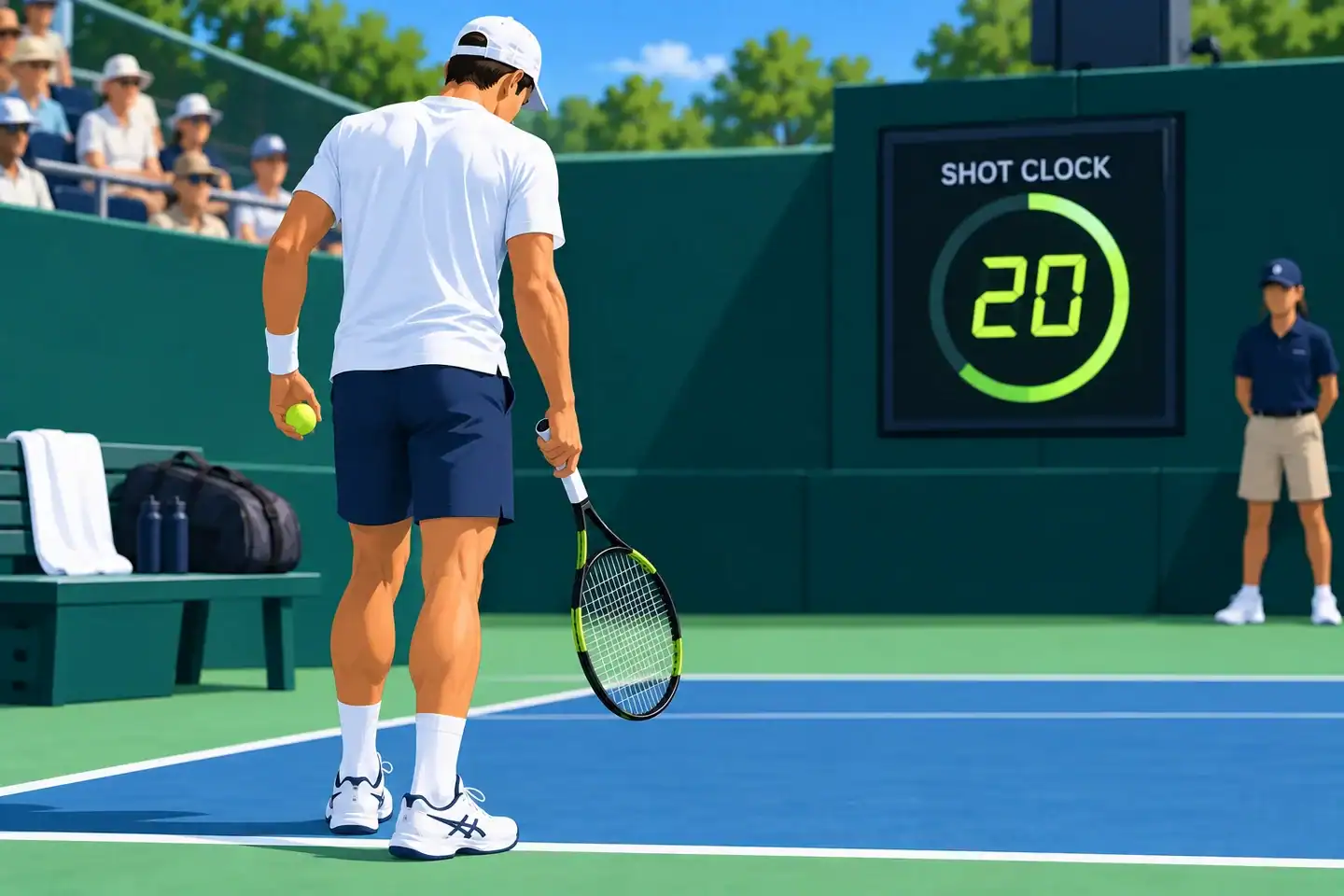
A shot clock in tennis displays the time available before play must resume. It helps officials apply the rules on time between points.
Practical example: After a point ends, the clock counts down while the server prepares for the next point.
Code Violation in Tennis
A code violation in tennis occurs when a player breaks rules governing conduct during a match. Different offences can lead to penalties under the applicable code.
Practical example: A player’s behaviour breaches the Code of Conduct and the chair umpire announces a code violation.
Warning in Tennis
A warning in tennis can be the first penalty issued for certain Code of Conduct violations. Further violations can result in stronger penalties.
Practical example: A player commits an offence covered by the Code of Conduct and receives a warning from the chair umpire.
Point Penalty in Tennis
A point penalty in tennis awards a point to the opponent as a sanction for certain violations. It can follow an earlier warning under the applicable penalty schedule.
Practical example: After a previous warning, another code violation results in the player’s opponent being awarded a point.
Default in Tennis
A default in tennis ends a player’s participation in the match because of a serious or qualifying violation. A default can occur through the penalty process or, in some circumstances, immediately.
Practical example: A serious conduct violation results in the player being defaulted and the match ending before normal completion.
Suspension of Play in Tennis
A suspension of play in tennis is a temporary stop to a match. Play can be suspended because of weather, darkness, unsafe court conditions, or other circumstances.
Practical example: Heavy rain makes the court unsafe, so the match is suspended and continues later from the existing score.
Tennis Rules and Betting
Rules and officiating decisions can affect how a tennis match develops or whether play continues as scheduled. Understanding terms such as medical time-out, point penalty, default, and suspension of play can therefore provide useful context when following tennis betting markets.
Betting is only available to participants above 18 years. Please bet responsibly. BeGambleAware.org