
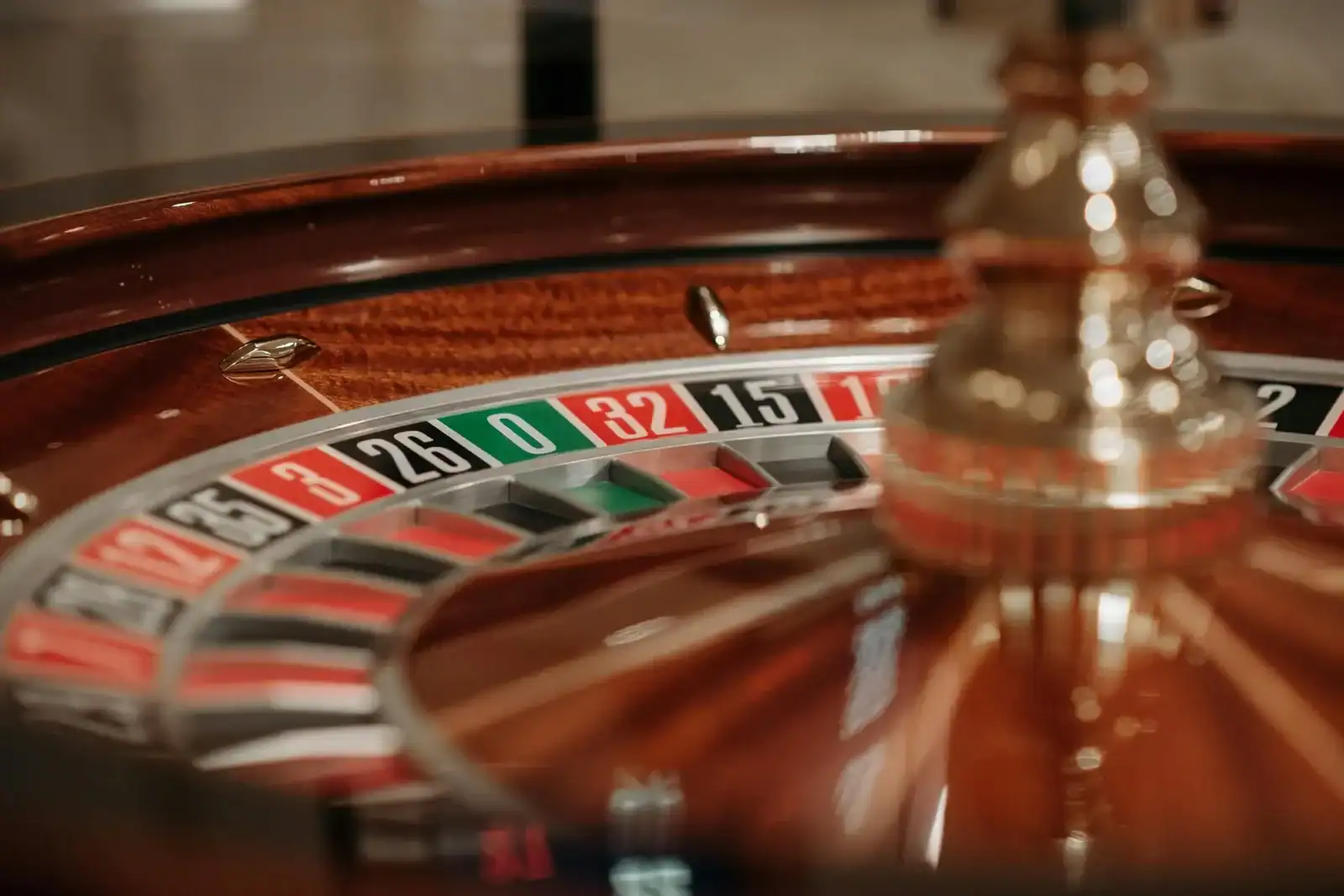


Roulette is a game of chance, and the roulette payout table shows the odds and payout for every bet. The odds are determined by the wheel design, but in the game, a single-number bet pays out at 35:1, while even-money bets such as red or black pay out at 1:1.
Ultimately, the payout depends on how many numbers a bet covers. The house edge comes from the zero, and the house edge for European roulette (2.70%) is lower than its American counterpart (5.26%).
This guide grapples with the roulette payout table, exploring probabilities of different bets and pitting inside and outside bets against each other.
Roulette Payout Table
American roulette contains 38 numbers, one more than European roulette, and that is due to the extra double zero pocket. Anyway, our roulette payout table references probabilities of making certain bets in European roulette, which should be useful:
| Bet | Numbers covered | Payout | Chances of winning in European roulette |
| Straight up | 1 | 35:1 | 2.70% |
| Split | 2 | 17:1 | 5.41% |
| Street | 3 | 11:1 | 8.11% |
| Corner | 4 | 8:1 | 10.81% |
| Six line | 6 | 5:1 | 16.22% |
| Dozen | 12 | 2:1 | 32.43% |
| Column | 12 | 2:1 | 32.43% |
| Red/Black, Odd/Even, 1-18/19-36 | 18 | 1:1 | 48.65% |
To work out a payout, multiply the stake by the payout ratio and add the stake back. For example, £10 on a split (17:1) returns £180, and £10 on a dozen (2:1) returns £30. The ratio itself comes from 36 ÷ the numbers covered − 1.
Remember, each result is independent of the other. While some players may look for patterns, they don’t carry any weight or significance for the next spin.
Inside Bets vs Outside Bets
To understand roulette payout table layout, it’s worth exploring inside bets and outside bets. Inside and outside bets are a central part of the game, both at live casino tables and in digital versions, so let’s see what they entail, and we’ve touched on the typical payouts available for these types of wagers.
Inside Bets
These refer to specific numbers and a set of numbers covering the inside of a roulette table. Below are some examples and the roulette payout table odds available:
- Straight bet – 35:1
- Split bet – 17:1
- Street bet – 11:1
- Corner bet – 8:1
Outside Bets
Outside bets are placed on the outer sections of the table, covering a wider range of numbers, and here are some examples, along with their respective payouts:
- Dozen – 2:1
- Column – 2:1
- Red or Black – 1:1
- Odd or Even – 1:1

Roulette Odds and the House Edge
The house edge is critical for calculating payouts and roulette odds. The chart below details the house edge built in for the most popular roulette variants found among table games:
| Variant | Pockets | House edge |
| European | 37 (single zero) | 2.70% |
| French (with La Partage/En Prison on even-money bets) | 37 | 1.35% on even-money bets |
| American | 38 (0 and 00) | 5.26% |
To see where the edge comes from, take a straight-up bet in European roulette. It wins 1 time in 37 on average but pays 35:1. Over 37 spins at £1 a spin, you would stake £37 and, on average, get back £36: the £1 difference is the 2.70% house edge, and it comes from the zero.
For more on the single-zero wheel, see our European roulette guide. The five-number bet, also known as the ‘Basket Bet’, covers five specific numbers (0, 00, 1, 2, 3), and it is only available in American roulette as it features a single and double zero pocket. It pays out at 6:1, but it has a house edge of 7.89%, which is higher than most other roulette bets.
Payout vs Probability
In roulette, the payouts are slightly lower than the true odds of winning, and that difference is the house edge. The house edge serves as the built-in difference between the true probability of winning a bet and the payout attached to it.
The house edge serves as a mathematical advantage to the casino, and the gap between this and the probability exists on every spin and every bet type. It doesn’t disappear because a wheel has paid out or if there has been an unusual sequence of results.
Roulette betting strategies can influence decision-making, but they don’t change the odds or house edge.
Frequently Asked Questions
What does a single number pay in roulette?
Single-number bets pay out at 35:1, and this translates to a probability or odds of 2.70%.
Which roulette has the lowest house edge?
French roulette on even-money bets where La Partage is applied reduces the house edge to 1.35%.
This is lower than European roulette, where the house edge stands at 2.70%.
What is the best payout in roulette?
A straight-up bet on a single number pays 35:1, the highest standard payout, but it also has the lowest chance of winning.
Betting is only available to participants above 18 years. Please bet responsibly. BeGambleAware.org