
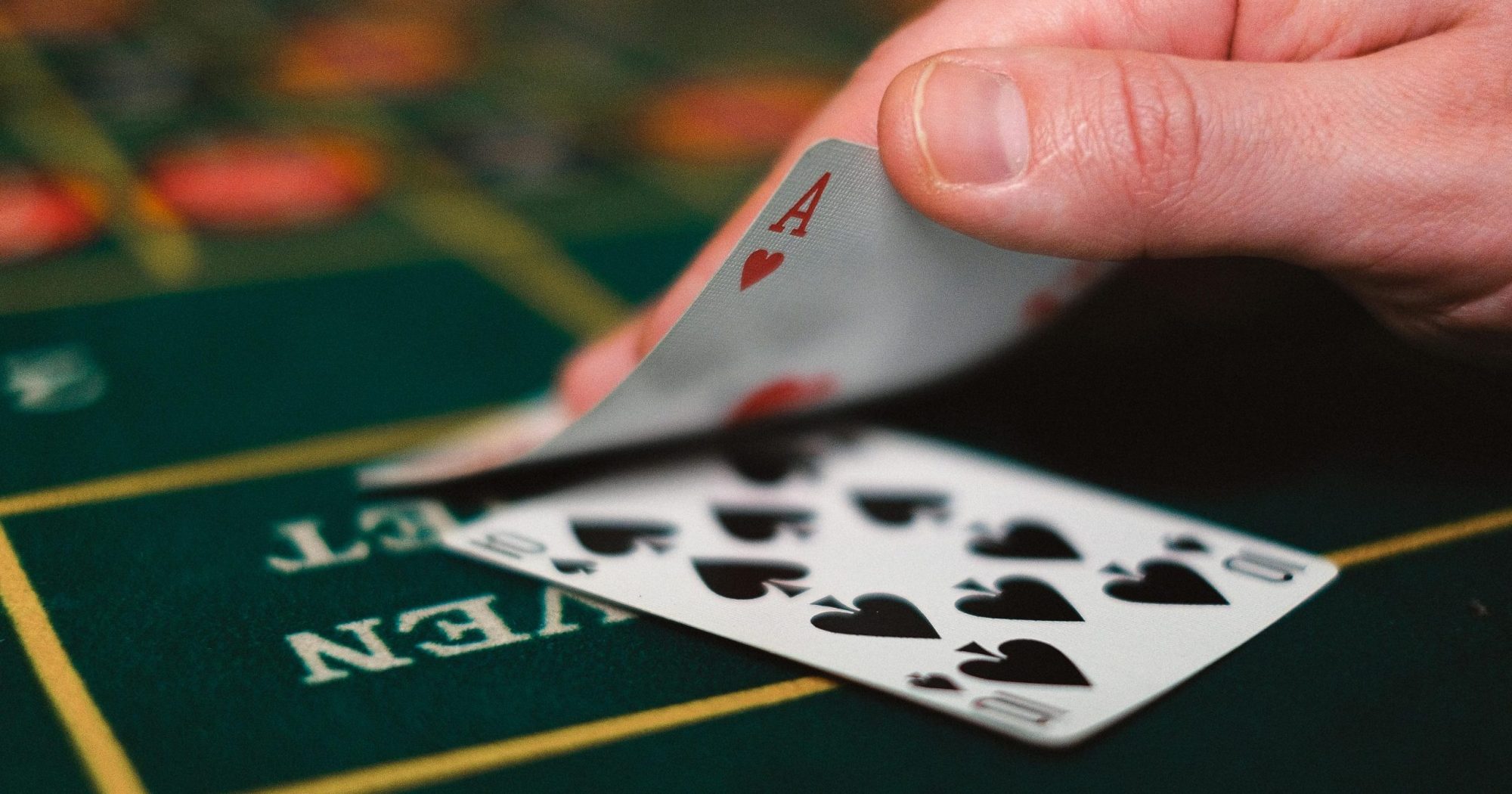


Blackjack is one of the most popular casino card games where players can influence the game’s outcome. For all the punters wondering how to play Blackjack, it simply means beating the dealer’s hand to get 21 or closer. For that to happen, players must understand the Blackjack rules and basic strategy.
That’s exactly why our guide is here, as we also simplify the gameplay and tips for beginners. Moreover, we will discuss the common mistakes to avoid, and break down the complex payouts, so you can easily master the game.
What is Blackjack?
Blackjack descended from 18th-century French card games like “Vingt-et-Un” (21) before gaining massive popularity upon landing in the US thanks to its simple rules and engaging gameplay. Often called “21”, the game centres on getting a hand value as close to 21 as possible without exceeding it.
Blackjack Card Values
Whether you try online Blackjack or in a physical casino, you can’t play the game without understanding the card values. Here’s what each card stands for:
| Card | Value |
| Number Cards (from 2 to 10) | Face Value |
| Face Cards (King, Queen, Jack) | 10 |
| Ace | 1 or 11 |
How to Play a Round of Blackjack
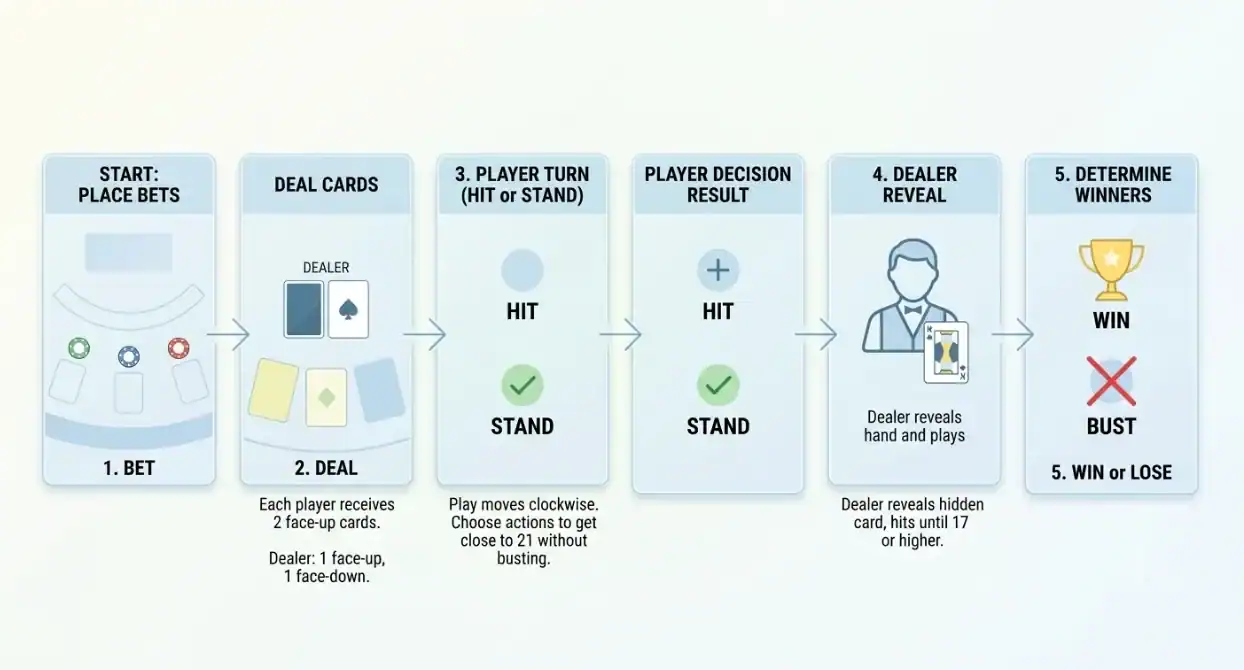
Now that you are familiar with the terms, let’s understand how to play 21 and the steps involved. Remember, the goal of Blackjack is the same for the players and the dealer, which is to get as close to 21 as possible without going over. Here’s what a typical Blackjack round looks like:
Step 1: Players place bets before any cards are dealt.
Step 2: The dealer gives two cards face-up to each player, while dealing themselves one card face-up and one face-down.
Step 3: Starting with the player to the dealer’s left and moving clockwise, each player decides to hit (take another card) or stand (keep their current hand). Players can hit multiple times until they reach 21 or go bust.
Step 4: Once all players’ hands are completed or busted, the dealer reveals their face-down card. The dealer must hit on a total of 16 or lower and stand on 17 or higher.
Step 5: The remaining players who have not gone bust win if their hand total beats the dealer’s final hand total.
Here’s what a typical round looks like:
How You Win or Lose in Blackjack
When playing Blackjack, you are always competing solely against the dealer, so you can ignore other players at the table. This means that there are only two hands in play, yours versus the dealer’s. Your main goal is to finish with a higher point total than the dealer without going over 21.
Winning can happen in a few ways, with the most lucrative outcome being a “Blackjack.” This rare, ideal two-card hand totals exactly 21 points. Otherwise, you win simply by holding a higher total than the dealer when the round ends. Also, if the dealer exceeds 21, they experience a dealer bust, which automatically makes every remaining, non-busted player a winner.
Meanwhile, you lose the hand if your total is lower than the dealer’s. You also lose automatically by busting, or going over 22 or higher. Once you bust, your hand is dead, and you are out of the round immediately, regardless of what the dealer ends up with. Finally, if you and the dealer finish with the same hand total, the round ends in a tie or “push”, where no one wins or loses, and your original bet is returned to you.

Blackjack Table Rules
Understanding table rules is important because they dictate the game, directly affecting your Blackjack strategy and overall winning odds.
- Soft 17: A soft hand contains an Ace valued at either 1 or 11. Depending on the casino, rules will state whether the dealer must hit or stand on a soft 17 (an Ace and a 6), which impacts the house edge.
- Insurance: If the dealer’s visible face-up card is an Ace, players are offered an insurance side bet to protect against the dealer holding a 10-value card for a Blackjack.
- Surrender: Available at select casinos, this rule allows you to forfeit your hand early and recover half of your original bet if your starting cards are unfavourable.
- Number of decks: The quantity of card decks used influences basic strategy and odds, as fewer decks typically provide better odds for the player.
Common Beginner Blackjack Mistakes
New players often fall into traps by making decisions based on gut feelings rather than basic strategy. One major mistake is hitting on strong hands, such as taking another card when holding a hard 17 or higher. This drastically increases the risk of busting for very little potential reward.
Similarly, many beginners make the error of splitting pairs of tens or face cards. While turning a solid 20 into two separate hands might seem tempting, it breaks up a nearly guaranteed winning hand for two risky, uncertain hands. Another frequent mistake occurs before and during play through poor betting decisions and table selection.
Rookies frequently take insurance automatically whenever a dealer shows an Ace, despite it being an unfavourable side bet with a high house edge. Even worse is ignoring table payout rules, particularly by sitting at tables offering a 6:5 payout for a Blackjack instead of the traditional 3:2. Choosing a 6:5 table severely reduces your winnings over time and shifts the odds in favour of the casino.
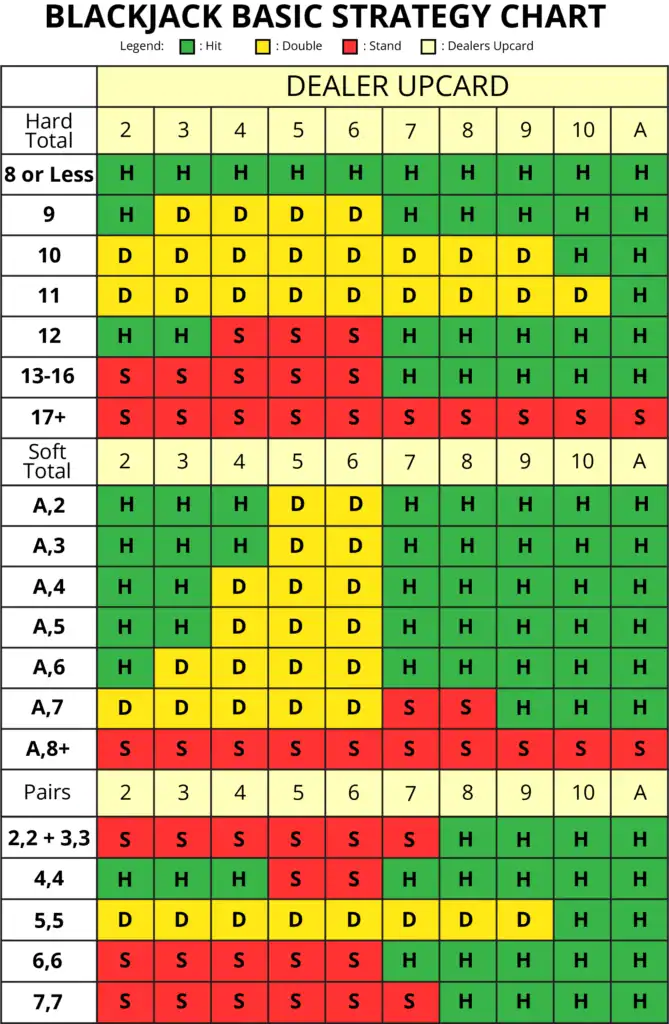
Blackjack basic strategy:
This is what a Blackjack basic strategy chart looks like:
Blackjack Payouts and Rules to Remember
Understanding how payouts work is key for managing your bankroll and choosing the right table, as different outcomes pay out at very different rates:
- 3:2 Blackjack Payout: This is the standard, traditional payout for landing a natural Blackjack on your initial deal. With a 3:2 ratio, the dealer pays you £1.50 for every £1 you bet (1.5 times your original wager). For example, a £10 bet returns a £15 profit.
- 6:5 Blackjack Payout: Some casinos offer a reduced 6:5 payout ratio for a natural Blackjack instead of 3:2. At a 6:5 table, you only receive £1.20 for every £1 wagered. So, a £10 bet returns just £12 in profit. This increases the casino’s advantage over the player.
- Even Money (1:1 Payout): If the dealer shows an Ace, a player with a natural Blackjack can choose “even money” to secure a guaranteed 1:1 payout immediately. Declining this offer means risking a push, winning nothing if the dealer also turns out to have blackjack, or securing the full 3:2 payout if the dealer does not.
- Push: A push occurs when your hand total and the dealer’s hand total are equal in value. In this scenario, there is no win or loss, and your original bet is returned to you.
Responsible Gaming in Blackjack
It’s always better to play any casino game as a fun activity, so when you play Blackjack, you can follow these responsible gaming practices:
- Only gamble with money you can safely afford to lose, and set a strict spending budget before playing that you stick to no matter what.
- Memorise or keep a basic strategy guide open in a separate window so you can quickly refer to it while playing.
- Avoid betting more than half your bankroll at once. Risking that much on a single hand makes it too easy to lose half your chips in an instant.
- Stick to your strategy, even during a losing streak. Remaining disciplined is your best approach for maximising long-term success.
Betting is only available to participants above 18 years. Please bet responsibly. BeGambleAware.org