
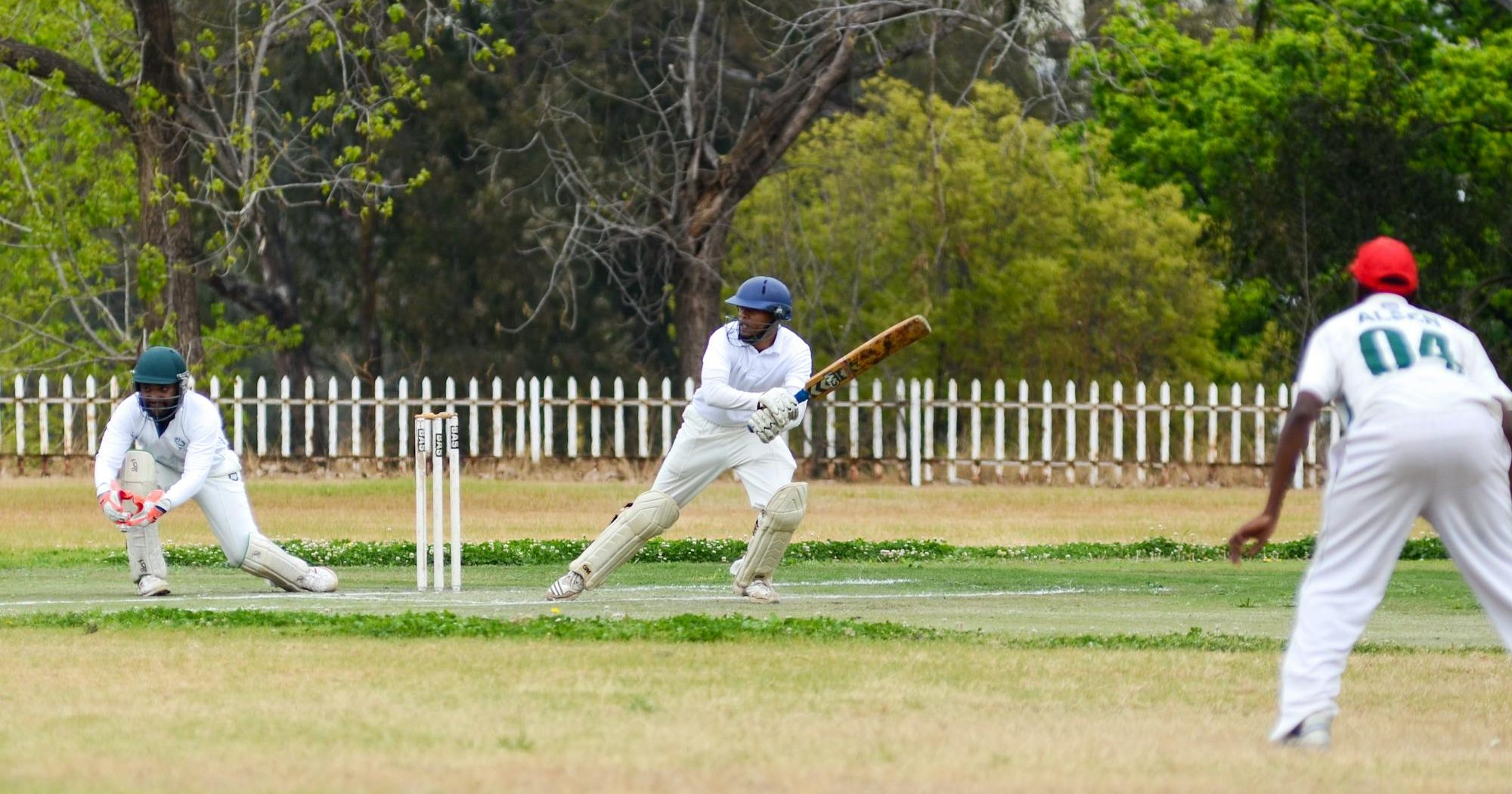


When you don’t know the cricket fielding positions, it might look like a smattering of players spread out at random. But each fielder has an important role to play as they stand around the ground to stop their opponents from scoring runs. They are grouped based on their proximity to the pitch, so they can be close infield positions, infield positions, or outfield positions.
With its multiple technical terms, it can leave rookies in total confusion. However, this guide will help you get a grasp of the cricket positions and make the jargon easy to understand. Let’s get right into it.
Understanding the Cricket Field
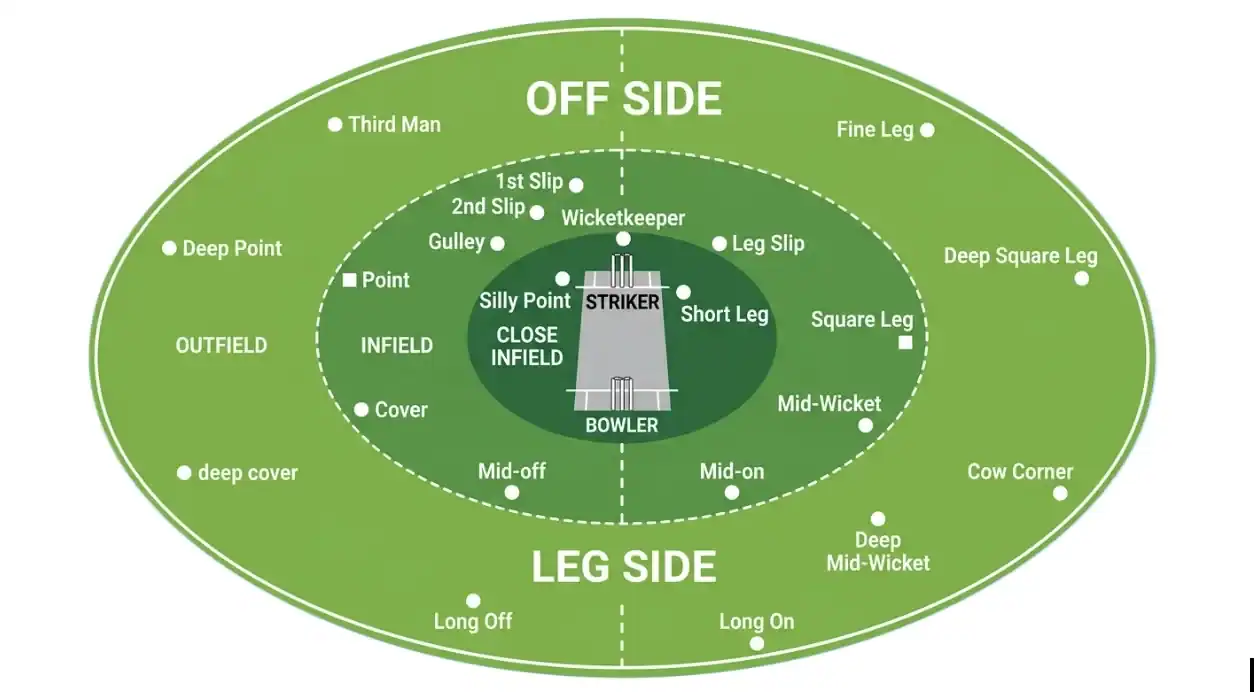
The field is split into two halves relative to the batter taking strike. The off side is the half in front of the batter’s body as they face the bowler. And the leg side, also known as the on side, is the half behind the batter’s body. As all fielding positions in cricket are defined relative to where the batter stands, their exact location shifts depending on who is at the crease.
Note: All positions in this guide use a right-handed batter as the reference point. If a left-handed batter is at strike, the entire layout is simply mirrored across the centre of the pitch.
Cricket Fielding Positions: Complex Terms Explained in Simple Words
Cricket uses specific words to pinpoint a fielder’s exact distance and angle relative to the batter. Distance is captured by terms like:
- Short: Positioned very close to the pitch and batter.
- Deep: Located far out near the boundary line.
- Long: Positioned at a distance, typically towards the straight ends of the ground.
On the other hand, directional angles relative to the pitch line are described using terms such as:
- Fine: Closer to the imaginary straight line running down the pitch behind or ahead of the stumps.
- Square: Aligned along or close to the horizontal line of the batter’s crease.
- Forward: Positioned ahead of the batter toward the bowler’s end.
- Backward: Positioned behind the batter toward the wicketkeeper.
Why Fielding Positions Change During a Match
Cricket field positions change constantly throughout a match, and they are never fixed in place. A captain can adjust the field at almost any point during the game. But the ball should be dead, so no adjustments can be made once the bowler begins their run-up. These shifts are an important element of the game.
They are influenced by the match format (Test, ODI, or T20), the current match situation, and the unique strengths or weaknesses of the batter taking strike. As an innings goes on, the fielding captain must read the game and adapt to pitch and weather conditions. If the ball is swinging early and causing mistakes, the captain will set an attacking field with extra slips or close-in fielders to catch edges.
Meanwhile, if a batter gets comfortable and starts hitting boundaries, the strategy shifts to defence, placing fielders near the boundary to stop runs. Whether reacting to different bowler styles or powerplay rules, changing the field is necessary to control the match and take wickets.
Let’s look at the main fielding positions (cricket).
| Position | Area | Main Responsibility |
| Wicketkeeper | Behind stumps | Catch edges, stump, and run-out |
| Slip | Close infield | Catch edges behind the batter |
| Gulley | Close infield | Catch thick high edges wide of slips |
| Short Leg | Close infield | Catch close-in deflections, and bat-pad catches |
| Point | Infield | Stop cut shots and prevent quick singles |
| Cover | Infield | Save runs from drives and athletic fielding |
| Mid-off | Infield | Stop straight drives and support the bowler |
| Mid-on | Infield | Stop straight drives on the leg side |
| Mid-wicket | Infield | Stop legside runs and boundaries |
| Square Leg | Infield | Stop glanced shots and pull shots |
| Third Man | Outfield | Stop edged boundaries and deep cuts |
| Deep Cover | Outfield | Save boundaries from aggressive drives |
| Long Off | Outfield | Prevent boundaries from straight driving |
| Long On | Outfield | Prevent boundaries from straight driving |
| Deep Mid-Wicket | Outfield | Protect the boundary against big pulls and sweeps |
| Fine Leg | Outfield | Catch mis-timed glances and stop boundary sweeps |
Here’s how cricket fielding positions look:
Conclusion:
Understanding cricket fielding positions helps readers follow matches more easily by making the action clearer and enjoyable. It allows fans to grasp tactical captaincy decisions, such as setting defensive or attacking fields for different batters. Recognising these positions also helps spot how field placements adapt throughout a game based on match conditions, pitch behaviour, and the bowler’s strategy.
What Should You Know More About Cricket Fielding Positions? (FAQs)
What Is the Most Important Fielding Position in Cricket?
The wicketkeeper is considered the most important position because they are involved in almost every single ball. Standing directly behind the stumps, they take catches, stop stray balls, and make quick stumpings to get batters out.
Why Are Some Cricket Fielding Positions Called “Silly”?
“Silly” positions in cricket, such as Silly Point, are positioned extremely close to the batter. They got this name because standing so close was considered foolish or silly since the fielder is at high risk of getting hit.
Do Fielding Positions Change for Left-Handed Batters?
Yes, when a left-hander bats, the off side and leg side flip. The fielders stay in the same relative roles, but they mirror across the pitch to match the batter’s new stance.
Betting is only available to participants above 18 years. Please bet responsibly. BeGambleAware.org