
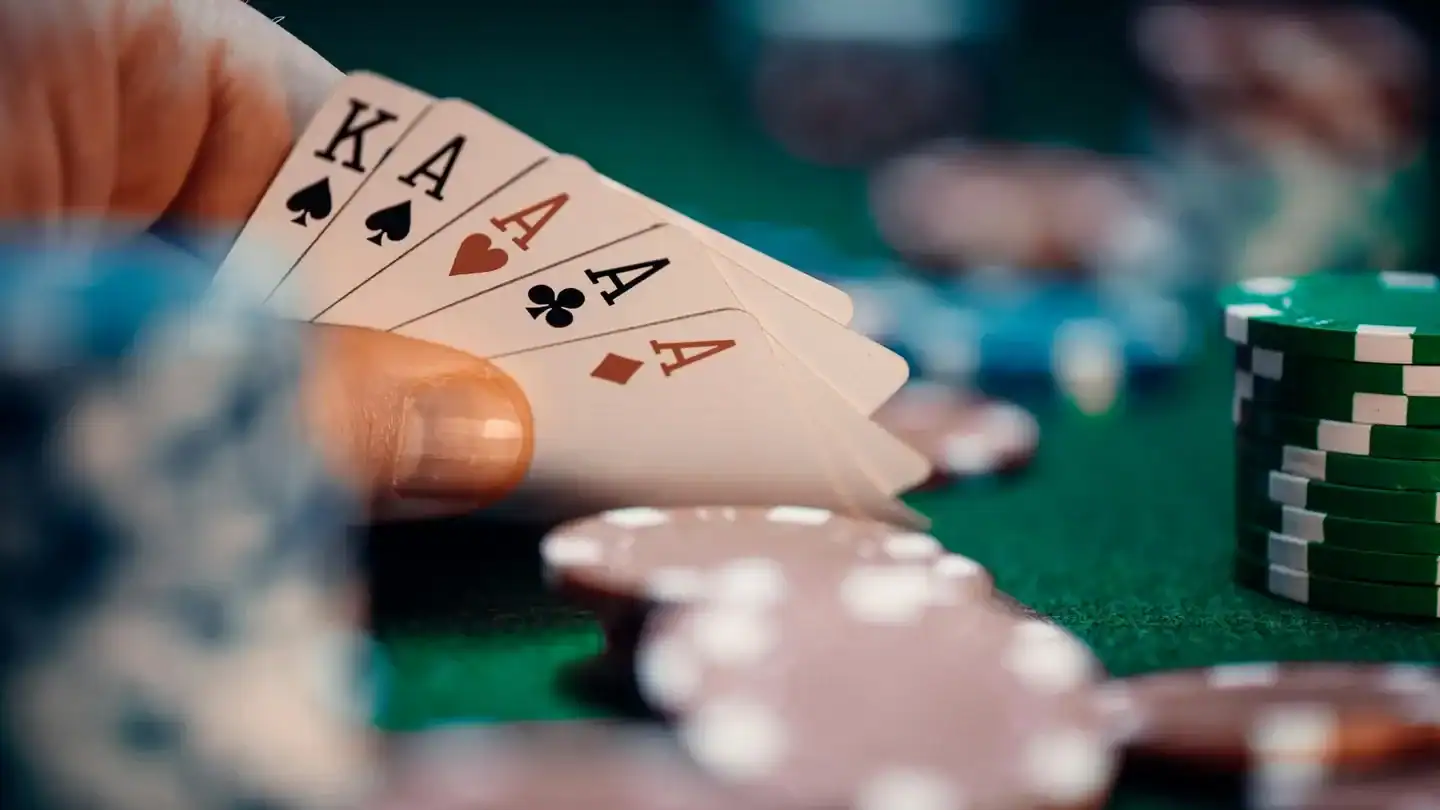

Poker is not a single game but a category of card games that share similar principles. Across the different types of poker, players aim to form the best possible hand or encourage opponents to fold through betting rounds.
While the fundamental ideas, including hand rankings, wagering, and card combinations, remain consistent, each poker variant follows its own structure. Some use shared community cards, while others rely entirely on cards dealt directly to each player.
This guide explains the main types of poker and how their rules and formats differ.
What Defines a Poker Game?
Before looking at the different types of poker, it helps to understand the elements that most variants share.
In general, poker games include:
- Standard hand rankings, such as pairs, straights, flushes, and full houses
- Betting rounds, where players can bet, call, raise, or fold
- Card distribution, either through private cards, community cards, or both
Where poker variants differ most is in how cards are dealt and how players construct their final hand. Some formats require players to combine personal cards with community cards, while others rely only on the cards dealt directly to each participant.
Texas Hold’em
Basic Rules
Texas Hold’em is widely recognised as one of the most played types of poker. In this format, each player receives two private cards known as “hole cards.”
Five community cards are placed face up on the table over several stages of the hand.
Betting Structure
Texas Hold’em includes four betting rounds:
- Pre-flop (after players receive their hole cards)
- Flop (three community cards revealed)
- Turn (fourth community card revealed)
- River (fifth community card revealed)
Players form the best possible five-card hand using any combination of their hole cards and the community cards.
Why It Is Widely Played
Texas Hold’em is common in both tournaments and online poker environments due to its clear structure and strategic depth. There are multiple variations of Texas Hold’em available to play at 7bet, including Ultimate Texas Hold’em and Casino Hold’em.
Omaha Poker
How Omaha Works
Omaha is another popular poker variant that also uses community cards. However, each player receives four private cards instead of two.
Five community cards are placed on the table, similar to Texas Hold’em.
Key Rule Difference
In Omaha, players must use exactly two of their private cards and three of the community cards to form their final hand.
This rule creates different strategic considerations compared with Hold’em.
Omaha Hi and Omaha Hi-Lo
Two common versions of Omaha exist:
- Omaha Hi: the highest-ranking hand wins the pot
- Omaha Hi-Lo: the pot may be split between the highest and lowest qualifying hands
Seven Card Stud
No Community Cards
Seven Card Stud differs from community card games because each player receives their own set of cards. There are no shared cards on the table.
Seven Total Cards
Players receive a total of seven cards during the hand:
- Some cards are dealt face down
- Others are dealt face up
From these seven cards, players form the best five-card hand.
Betting Rounds
Multiple betting rounds take place as additional cards are revealed. Because several cards are visible, players can observe parts of their opponents’ hands throughout the round.
Five Card Draw
Traditional Poker Format
Five Card Draw is often considered one of the simplest types of poker. Each player receives five cards face down at the start of the hand.
Card Exchange Phase
After an initial betting round, players may discard one or more cards and receive replacements.
This draw phase gives players an opportunity to improve their hand.
Straightforward Gameplay
Compared with other variants, Five Card Draw includes fewer betting rounds and a more direct structure.
Caribbean Stud Poker
Casino Table Game Format
Caribbean Stud Poker differs from many traditional poker games because players compete against the dealer rather than against other participants.
Five Card Hands
Both the player and the dealer receive five cards. One of the dealer’s cards is usually visible during the round.
Dealer Qualification
In many versions, the dealer must hold a minimum qualifying hand for the round to proceed. If the dealer does not qualify, certain wagers may be returned according to the game rules.
Video Poker
Machine-Based Poker Format
Video poker is played on electronic machines rather than against other players.
Draw Mechanics
Players are initially dealt five cards. They then choose which cards to keep and which to replace in order to improve their final hand.
Paytable Structure
Unlike table poker games, video poker uses a paytable that determines payouts based on the final hand combination.
Comparing the Main Types of Poker
Although the core concept remains the same, the main types of poker differ in several important ways.
Key differences include:
- Number of cards dealt to each player
- Use of community cards versus individual hands
- Number of betting rounds during a hand
- Whether the game is played against other players or the house
Understanding these distinctions helps clarify why each poker variant feels different in terms of pace and gameplay.
How Poker Formats Can Vary
Beyond the rules of individual poker games, formats can also change how a poker game is played.
Common formats include:
- Cash games, where players wager with real-money chips
- Tournament formats, where players compete until one player holds all chips
Betting limits can also differ:
- No-limit: players may wager any number of chips
- Pot-limit: maximum bets are linked to the size of the pot
- Fixed-limit: betting amounts are predetermined
These structural differences can influence the overall rhythm of a poker game.
How Poker Variants Shape the Game
The various types of poker differ mainly in how cards are dealt, how players build their final hands, and how betting rounds are structured.
Some games rely on shared community cards, while others use individual hands dealt directly to each player. Casino formats may also involve playing against a dealer rather than competing with other players.
Understanding these differences can help players recognise how each variant works and what rules apply before joining a table.
Betting is only available to participants aged 18 years and over. Please bet responsibly. BeGambleAware.org