
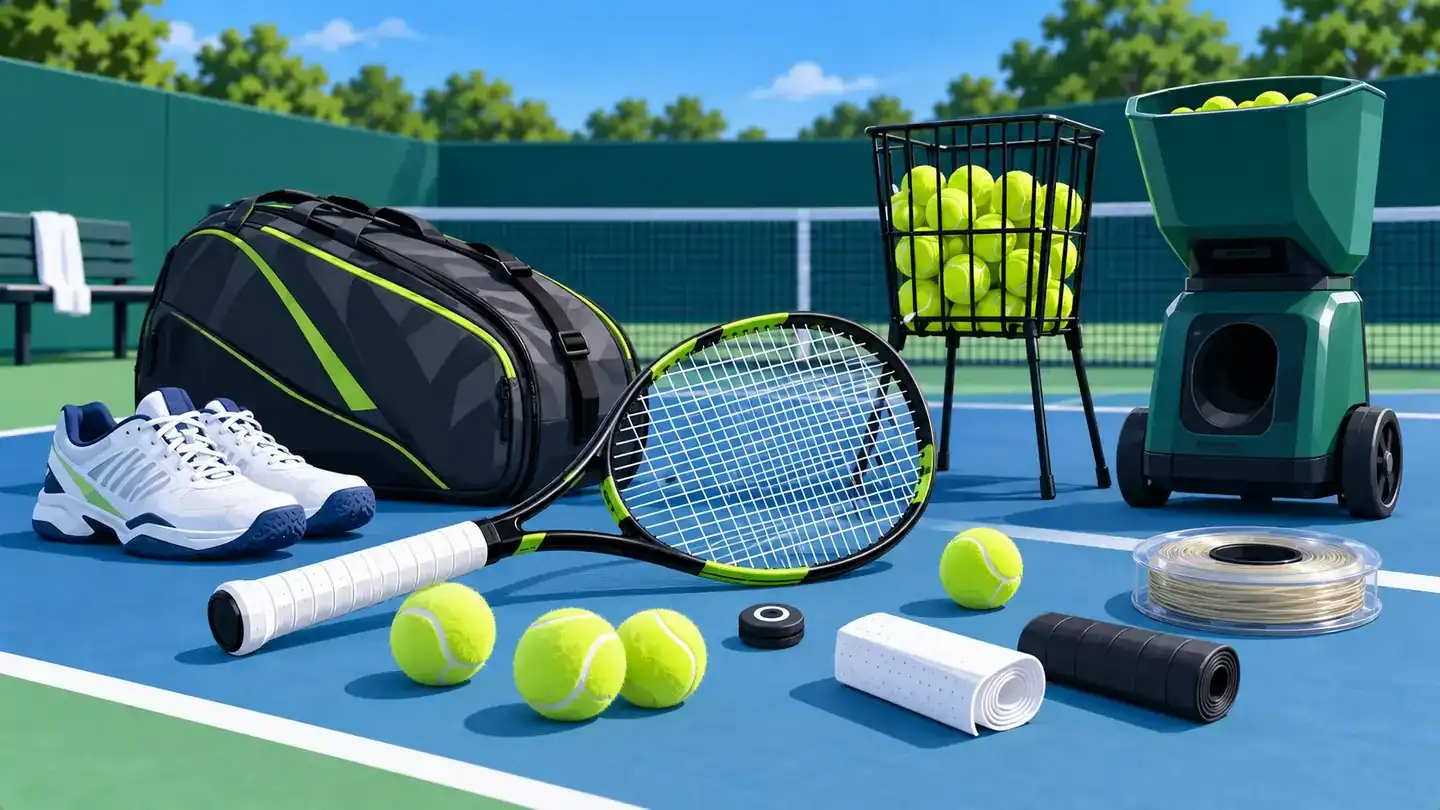


Tennis players use different equipment during matches and training sessions. This includes racquets, balls, shoes, strings, grips, and training tools. This guide explains common tennis equipment terms with clear definitions and practical examples.
Tennis Racquet
A tennis racquet is the main piece of equipment used to hit the ball. It has a frame, handle, and stringed hitting surface.
Practical example: Two racquets may look similar but have different weights, head sizes, and string patterns. These features can change how the racquet feels during play.
Tennis Ball
A tennis ball is the felt-covered ball used during a tennis match. Competition balls must meet specific standards for properties such as size, weight, and bounce.
Practical example: Players usually open a new sealed can of pressurised balls before playing. Over time, the balls can lose pressure and their bounce can change.
Tennis Shoes
Tennis shoes are designed for the movement involved in playing tennis. They provide support for running, stopping, and changing direction.
Practical example: A player who regularly plays on clay may use shoes designed to provide grip on that surface.
Tennis Strings
Tennis strings form the hitting surface inside the racquet head. They can be made from materials such as natural gut, nylon, polyester, or multifilament fibres.
Practical example: A player can choose a string type and tension based on the feel and playing characteristics they prefer.
Ball Machine
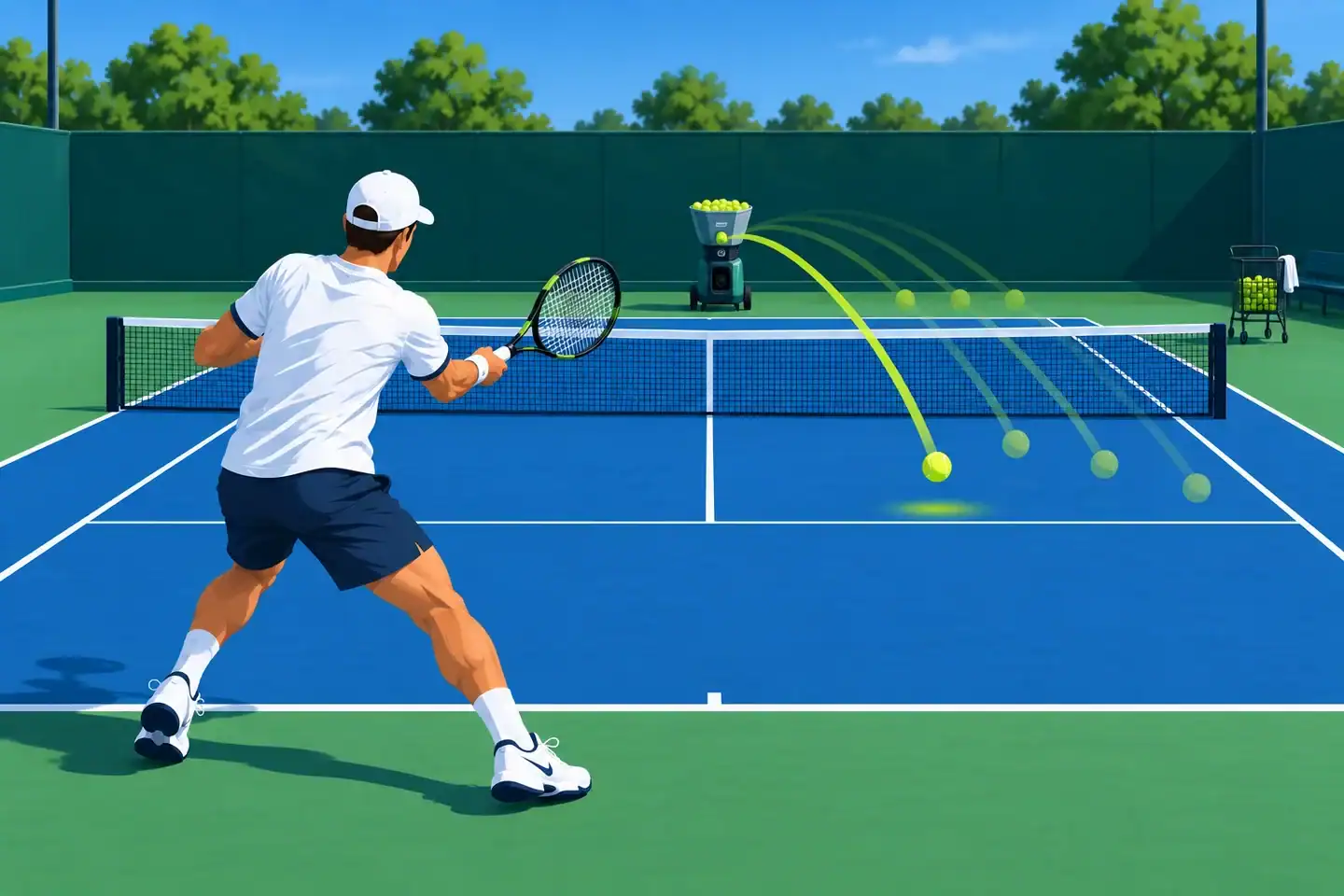
A ball machine is a training device that sends tennis balls towards a player. It allows the same type of shot to be practised many times.
Practical example: A player can set up a ball machine to feed repeated balls towards the forehand side and practise groundstrokes without a hitting partner.
Ball Hopper
A ball hopper is a container used to collect, store, and carry tennis balls during practice. Some models can also be used as a stand while balls are being fed.
Practical example: A coach can use a ball hopper to carry a large number of balls onto the court for a training session.
Tennis Bag
A tennis bag is designed to carry racquets and other tennis equipment. Larger bags can also hold shoes, balls, clothing, and accessories.
Practical example: A player can use one tennis bag to carry several racquets, a pair of tennis shoes, balls, and spare grips to the court.
Overgrip
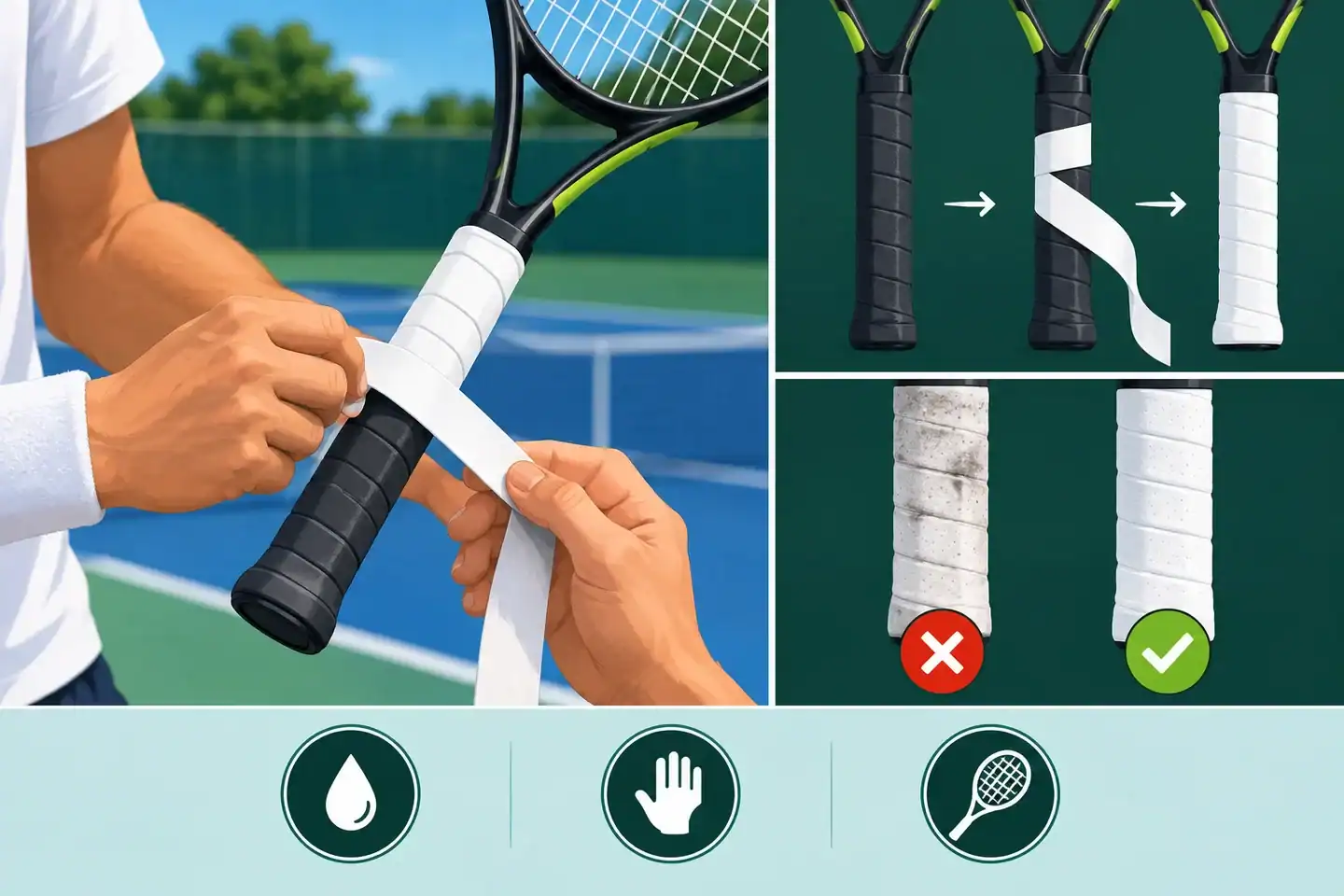
An overgrip is a thin layer wrapped over the existing grip of a tennis racquet. It can provide extra grip and help absorb moisture.
Practical example: A player may replace an overgrip when it becomes worn or slippery after regular use.
Replacement Grip
A replacement grip is the main grip fitted directly around the racquet handle. It is usually thicker than an overgrip and provides cushioning for the hand.
Practical example: A player can remove a worn replacement grip and fit a new one directly onto the racquet handle.
Vibration Dampener
A vibration dampener is a small accessory placed between the strings near the bottom of the racquet head. It reduces some of the string vibration and changes the sound produced when the ball is struck.
Practical example: A player may add a vibration dampener because they prefer the feel or sound of the racquet when hitting the ball.
Tennis Equipment and Betting
Tennis equipment is one part of the wider playing environment. Equipment choices, court surfaces, and match conditions can provide additional context when following players and different tennis betting markets.
Betting is only available to participants above 18 years. Please bet responsibly. BeGambleAware.org