
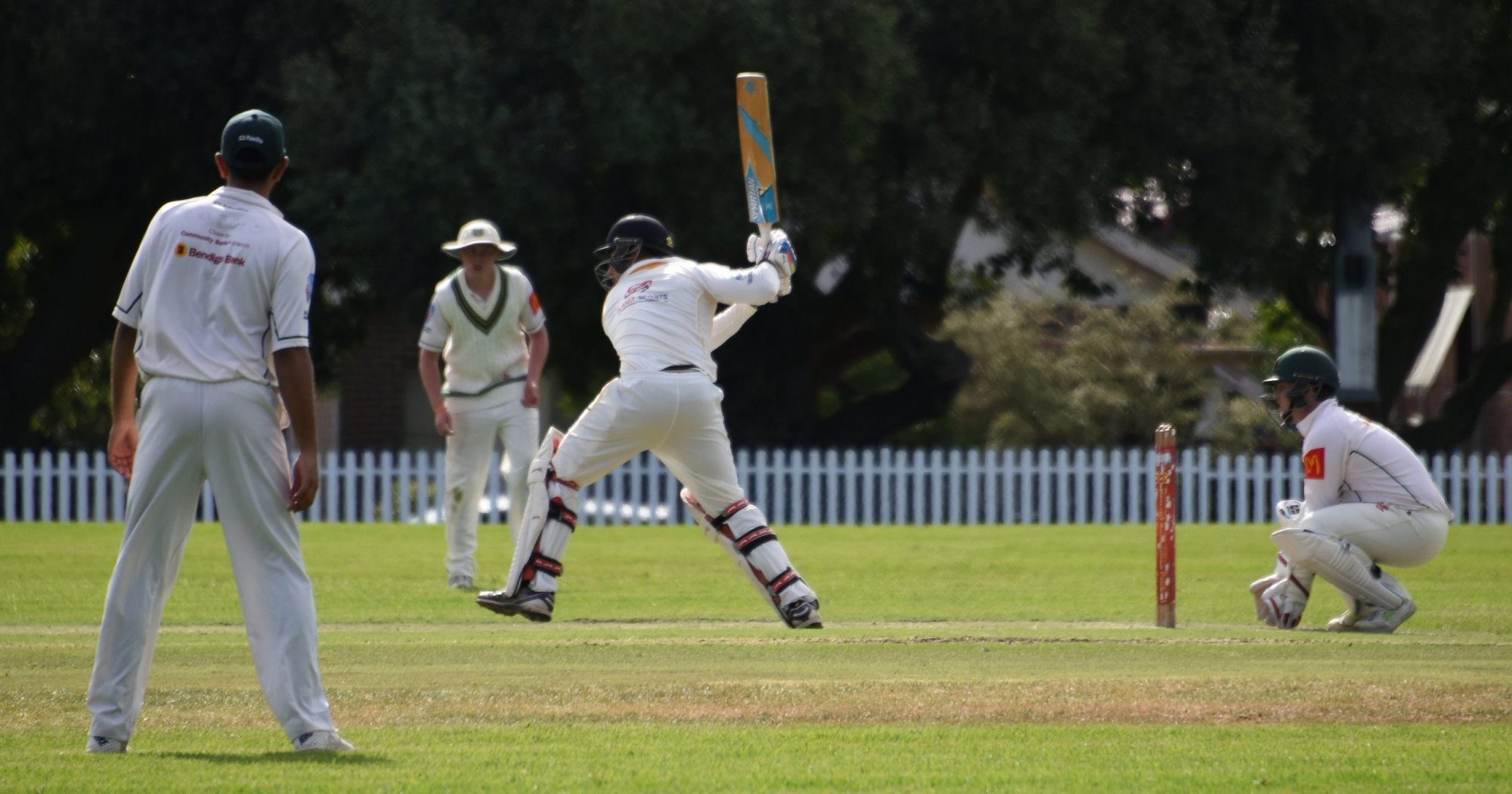


Cricket has its own language, especially for batting. A newcomer watching a match may hear commentators describe a “good leave” or a batter “carrying the bat” and wonder what these phrases mean. This glossary explains the most common cricket batting terms: milestones, shots, batting positions, statistics and the ways a batter can be dismissed. Each entry is kept short and factual, so new fans can follow commentary and scorecards more easily.
Batting Milestones
A duck means a batter is dismissed without scoring. A golden duck is a duck on the very first ball faced. Reaching 50 runs is a half-century, and 100 runs is a century, often called a ton. A double century means 200 runs in one innings. A triple century, meaning 300 runs in one innings, is rare. When a batter finishes an innings unbeaten, the scorecard marks it with an asterisk, as in 75*, meaning not out. “Carrying the bat” describes an opener who remains not out until the innings closes while every other batter has been dismissed. The scorecard tracks each player’s runs towards these milestones throughout a match.
Batting Positions and Roles
Openers begin the innings and typically face the new ball. The top order, usually the openers and the number three, is expected to lay the foundation of the innings. The middle order, typically numbers four to seven, follows, while the lower order, known as the tail, is made up mainly of specialist bowlers with less batting ability, often called tail-enders. A nightwatchman is sent in near the close of play to protect a recognised batter until the next day. In limited-overs cricket, such as the T20 World Cup, a finisher bats in the closing overs and is expected to complete the innings or a run chase. An all-rounder contributes with both bat and ball. Captains adjust the order to suit conditions and the match situation.
Common Batting Shots
Batting shots are usually described by the direction and intent of the stroke.
- Cover drive: a full-faced stroke through the covers, on the off side.
- Straight drive: a stroke played back past the bowler.
- On drive: a stroke played between the bowler and mid-on.
- Cut: a cross-bat shot played square of the wicket on the off side.
- Pull: a cross-bat stroke to a short ball at around waist height, directed towards the leg side.
- Hook: a similar cross-bat shot to a short ball at head height.
- Sweep: a low stroke across the line, often used against spin.
- Reverse sweep: a sweep played in the opposite direction, with the bat turned over, sending the ball to the off side.
- Ramp or scoop: a shot that lifts the ball over the wicketkeeper’s head with soft hands.
- Leave: a deliberate decision to let the ball pass without offering a shot.
- Defensive block: a straight-bat stroke played softly to protect the stumps.
All of these shots are common cricket batting terms that new fans will hear in commentary.
Batting Statistics
Batting statistics summarise performance across innings. A cricket batting average divides total runs by the number of dismissals. Not-out innings are excluded from the dismissal count, so unbeaten innings add runs without adding a dismissal, which raises the average. A strike rate measures runs scored per 100 balls faced and is most often quoted in limited-overs cricket. A partnership is the number of runs two batters add together before a wicket falls, recorded for each wicket. A batter’s highest score is the largest individual innings they have made in a given format. Averages are usually quoted separately for each format, since conditions and match lengths differ. Read together, these figures give a fuller picture of a batter’s performance than any single innings.
Ways a Batter Can Be Out
Several cricket batting terms describe the ways a batter can be dismissed. Bowled means the ball hits the stumps and dislodges a bail. Caught means a fielder catches the ball off the bat or glove before it touches the ground. LBW, or leg before wicket, means the ball hits the batter’s body, usually the leg, without touching the bat first, and the umpire judges that it would otherwise have hit the stumps. Run out means the fielding side breaks the stumps while a batter is out of the crease attempting a run. Stumped means the wicketkeeper breaks the stumps while the batter is out of the crease and not attempting a run. Hit wicket means the batter breaks the stumps with the bat or body while playing a shot or setting off for a run. Obstructing the field, timed out and hitting the ball twice are rarer dismissals. Retired hurt is not a dismissal: a batter who leaves the field injured is recorded as not out.
Other Batting Terms
The crease is the line marking a batter’s ground; outside it, a batter can be stumped or run out. Taking guard means asking the umpire to help line the bat up with a chosen stump, such as middle or leg. An edge, or nick, is when the ball touches the edge of the bat rather than the face. To middle the ball is to strike it with the centre of the bat. Sledging refers to verbal taunts aimed at unsettling an opponent. A declaration is a captain’s decision to end the innings while wickets remain. In Test cricket, the follow-on is when the side batting second falls a set margin behind on first innings and is asked to bat again.
Frequently Asked Questions
What is a duck in cricket?
A duck is recorded when a batter is dismissed without scoring any runs. It appears as 0 on the scorecard, and a duck on the first ball faced is a golden duck.
What does the asterisk mean next to a score?
The asterisk marks a not-out innings, so 75* means the batter scored 75 and was unbeaten when the innings ended. The same notation is used on scorecards in Test, one-day and T20 cricket.
What is a good strike rate in cricket?
It depends on the format. Strike rate is runs per 100 balls, so batters in T20 cricket usually score faster than in Test cricket.
What does carrying the bat mean?
An opener who is still not out when the rest of the team has been dismissed.
What is a nightwatchman?
A lower-order batter sent in near the close of play to protect a recognised batter until the next day.
Betting is only available to participants above 18 years. Please bet responsibly. BeGambleAware.org