
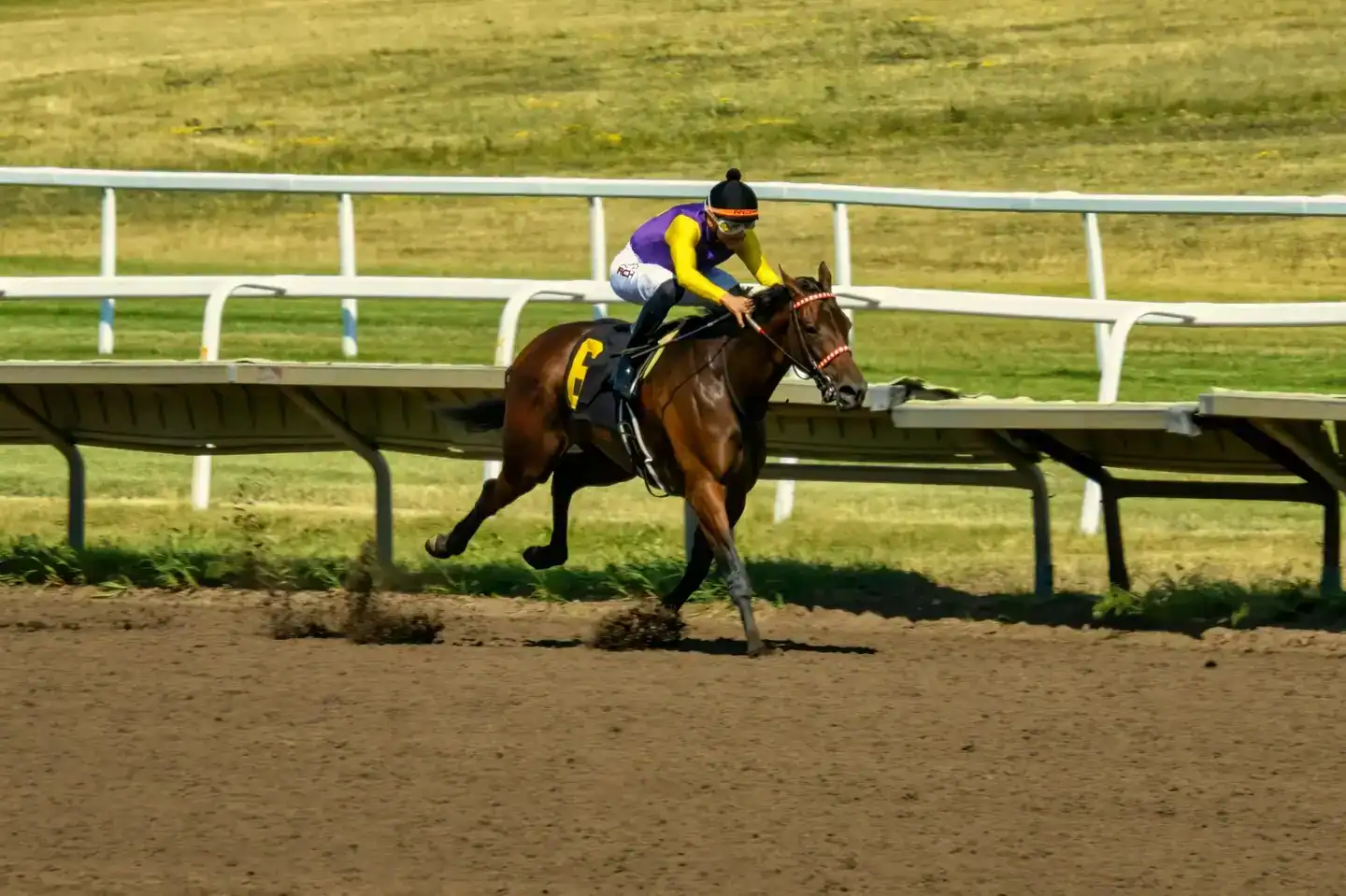


A horse racing racecard features many abbreviations, including PU. But what does PU mean in horse racing? It stands for “pulled up”, and it means the jockey stopped the horse before the finish so it didn’t complete the race.
In form figures it is shown as “P”, while race results use “PU”, and it is common in UK jump racing, especially over long distances. Our guide will explore the underlying reasons as to why a PU occurs, and how it can impact bets.
Why Do Jockeys Pull Up a Horse?
A PU in horse racing happens more often than you might think. This segment of the guide explores the underlying reasons behind what causes a PU:
- Horse welfare – A horse may appear injured or lame. If the horse is showing signs of distress or is not moving properly, the jockey may stop to prevent further harm.
- Fatigue – In longer races, particularly over jumps, a horse might tire out before the end. Therefore, rather than push unnecessarily to gain position, the jockey might choose to pull up.
- Equipment problems – Slipped or loose saddles or even broken reins can cause safety problems and force a pull up.
- Refusal or mistake at jump – In National Hunt races, such as the Grand National, a horse may refuse a jump or make a mistake which can lead to a pull up.
- Heavy ground – If conditions are heavy or too testing, a horse might be pulled up to avoid fatigue strain.
How PU Appears in Form Figures
Typically, form figures read left to right, representing oldest to most recent performances. To use an example, you might see form reading 3P12, which means 3rd, pulled up, 1st and 2nd.
A P can be followed by a vet’s report or a stewards’ note, which can help explain why there was a pull up. These notes usually appear in the full race result, in the short comment on each runner’s run and in the stewards’ reports published after the race.
PU vs Other Non-Finishing Abbreviations
Pulled up is just one of a few non-finishing abbreviations in horse racing. We’ve shared a few more below in a short list, but our guide to what UR means in horse racing contains a full table with all relevant abbreviations:
- F (fell): the horse fell at an obstacle.
- U/UR (unseated rider): the jockey came off, but the horse didn’t fall.
- B/BD (brought down): another runner caused the fall.
- R (refused): the horse refused an obstacle.
- O/RO (ran out): the horse went round an obstacle.
Is a P in a Horse’s Form a Bad Sign?
Not always. A single P doesn’t necessarily say much about a horse’s ability, so it’s worth checking the reason in the race comment. A horse may have lost a shoe, bled, made a bad mistake or found the ground too soft. What matters more is whether it was a one-off or part of a pattern of P’s in recent runs.
What Happens to Bets If a Horse is Pulled Up?
If you have placed a win or an each-way bet on a horse that ran but didn’t finish, your wager will lose.
A non-runner, however, is different, as it was entered into a race but withdrew before it started, meaning it didn’t take part. As the wager isn’t active, refunds are returned in full to punters.
The onus is on bettors to check the full terms and conditions available at 7bet, including reading all wager rules to avoid disappointment.
Frequently Asked Questions
What does P mean in horse racing form?
P stands for Pulled Up, and can be presented on a racecard as P or PU. This happens when a jockey stops a runner during the race.
Is a pulled-up horse injured?
No, not always. Horses can be pulled up for a variety of reasons, including tiredness, ground conditions if they are too heavy, or even as a precautionary measure to prevent further harm.
Betting is only available to participants above 18 years. Please bet responsibly. BeGambleAware.org