
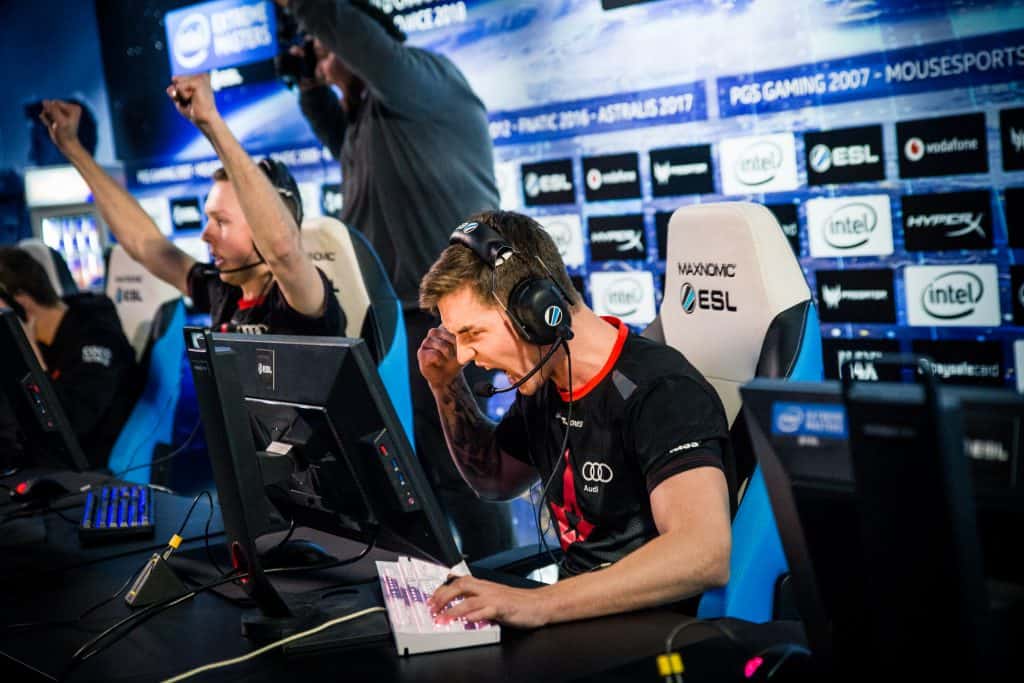


If you’re into competitive Counter-Strike, you’ll know CS2 Majors really matter. These are the tournaments that carry Valve’s official seal of approval. That sets them apart from everything else and two Majors are lined up for 2026. First up is IEM Cologne in June, followed by PGL Singapore, which runs from November into December. That Singapore stop marks only the second time a Major has landed in Asia since the CS2 era began. We’ll get into the tournament format, the qualification route, the 2026 schedule, the roll call of previous winners and where UK viewers can watch. The field has expanded to 32 teams now, a clear sign of how much the competitive landscape has broadened across various regions.
What Are CS2 Majors?
So what actually makes a CS2 Major different from any other big tournament? The short answer is Valve. These tournaments are backed by the people who made Counter-Strike, and that official sanctioning is what really matters. You can have other events with huge prize pools and all the biggest names in attendance, but unless Valve has put their stamp on it, it’s not a Major.
Major tournaments are organised by third-party tournament organisers such as ESL or PGL, but they are sanctioned and supported by Valve. This partnership gives Majors their unique status. The Major system existed long before Counter-Strike 2, having been a fixture of the CS:GO era since the first Major in November 2013 at DreamHack Winter. Following the transition to Counter-Strike 2 in 2023, the Major system continued with the same prestige and significance, maintaining the legacy of Counter-Strike.
Tournaments such as IEM Katowice, BLAST Premier events or other PGL tournaments may feature top teams and large prize pools, but they do not carry Major status unless explicitly designated as such by Valve. Major status is reserved for a select number of tournaments each year, typically two events per season. This exclusivity reinforces the prestige associated with winning a CS2 Major.
Modern majors feature teams from multiple competitive regions, including Europe, the Americas and Asia, reflecting the global nature of the Counter-Strike scene. Regional allocations ensure representation across the competitive landscape, with places distributed based on Valve Regional Standings. This global reach is part of what makes major tournaments so competitive across every region.
How Do CS2 Majors Work?
The modern CS2 Majors format has evolved significantly from previous iterations. The current structure, introduced at the BLAST.tv Austin Major 2025 and also used at the IEM Cologne Major 2026, features a 32-team field divided across three Swiss-system stages followed by a single-elimination playoff. This represents a notable expansion from the 24-team format that was standard during much of the CS:GO era. The change was implemented to accommodate more teams from an expanding global competitive scene and to provide additional opportunities for teams from emerging regions.
Number of Teams
Current CS2 Majors feature 32 teams, expanded from the previous 24-team system. Teams do not all enter at the same stage; instead, they are seeded into different stages based on their ranking and qualification position. This structure allows higher-ranked teams to bypass earlier rounds while giving lower-ranked teams a pathway through the tournament.
Stage 1, Stage 2 and Stage 3
The first three stages of a CS2 Major each use a Swiss-style system. In each stage, 16 teams compete, and eight teams advance to the next stage. Stage 1 features the lowest-seeded teams, with eight progressing to Stage 2. Stage 2 brings together the eight Stage 1 qualifiers and eight teams that entered directly, with another eight advancing. Stage 3 combines the eight Stage 2 qualifiers with eight top-seeded teams that received direct entry into this stage.
Higher-ranked teams may receive direct entry into Stage 2 or Stage 3 based on their Valve Regional Standings (VRS) positioning.
CS2 Major Playoffs
Eight teams reach the playoffs from Stage 3. The playoffs use a single-elimination bracket, starting with quarter-finals, followed by semi-finals and the grand final. The grand final is played as a best-of-five series, determining the Major champion.
CS2 Majors in 2026
The 2026 CS2 Major calendar features two premier events, giving teams two opportunities to compete for a Major title and fans two major tournaments to follow. This follows the established cadence of two Majors per year, with one held in the first half of the season and the second in the latter half. The two events are hosted in different regions, expanding the global reach of the CS2 Majors 2026 schedule and providing varied competitive conditions for participating teams.
IEM Cologne Major 2026
The IEM Cologne Major 2026 was held in Cologne, Germany, from 2–21 June 2026. The 32-team Major featured the three-stage Swiss format followed by single-elimination playoffs at the LANXESS Arena. Falcons won the tournament, defeating FURIA 3–0 in the grand final to claim their first Major title. Cologne has long been a significant venue in Counter-Strike, and hosting a Major there marked a notable return of the tournament to the city.
PGL Major Singapore 2026
The second Major of 2026 is the PGL Major Singapore, scheduled to run from 24 November to 13 December 2026. The tournament will take place in Singapore, with the final four days (10–13 December) held at the Singapore Indoor Stadium. The 32-team Major features a $1.25 million prize pool. Stage 1 is scheduled for 24–27 November, Stage 2 for 28 November–1 December, with the later stages running 3–13 December 2026. The winner will be confirmed following the conclusion of the tournament.
| CS2 Major | Location | Dates | Winner |
| IEM Cologne Major 2026 | Cologne, Germany | June 2026 | Falcons |
| PGL Major Singapore 2026 | Singapore | Nov–Dec 2026 | TBC |
How Do Teams Qualify for CS2 Majors?
The qualification system for CS2 Majors has changed significantly from earlier years. The modern system uses Valve Regional Standings rather than the previous Regional Major Ranking (RMR) system.
Valve Regional Standings
Valve Regional Standings (VRS) are used to determine Major invitations. Teams are ranked regionally based on their performance in eligible tournament results over a defined period. These rankings influence which teams receive invitations to the CS2 Majors and which stage they enter. The system rewards sustained excellence across multiple events rather than a single qualification tournament.
Regional Representation
Major places are divided between Europe, the Americas and Asia under Valve’s regional allocation system, with the allocation influenced by each region’s performance at the previous Major. VRS then determines which eligible teams receive invitations within each region and which stage they enter. Teams do not all enter at the same stage. Higher-ranked teams can receive direct entry into Stage 2 or Stage 3, while others begin in Stage 1. This structure ensures that top-performing teams are rewarded while still providing a pathway for emerging teams to compete.
For the IEM Cologne Major 2026, 16 teams began in Stage 1, eight entered in Stage 2 and another eight entered directly into Stage 3 based on VRS positioning. This system rewards consistent performance while still providing opportunities for teams to qualify through the earlier stages. The VRS approach also reduces the possibility of a single poor performance eliminating a team from Major contention.
Previous CS2 Major Winners
Since the transition to Counter-Strike 2, several teams have claimed majors across multiple continents. The CS2 era began with the PGL Major Copenhagen in March 2024 and has since seen tournaments held in Asia, North America and Europe. The following table shows the Major winners to date:
| Major | Winner |
| PGL Major Copenhagen 2024 | Natus Vincere |
| Perfect World Shanghai Major 2024 | Team Spirit |
| BLAST.tv Austin Major 2025 | Team Vitality |
| StarLadder Budapest Major 2025 | Team Vitality |
| IEM Cologne Major 2026 | Falcons |
First CS2 Major
The PGL Major Copenhagen 2024 holds the distinction of being the first Major played in Counter-Strike 2. The tournament took place from 17–31 March 2024 at the Royal Arena in Copenhagen, Denmark. Natus Vincere (NAVI) defeated FaZe Clan 2–1 in the grand final to claim the title, marking the organisation’s second Major victory following their win at PGL Major Stockholm 2021 in the CS:GO era.
Teams With Multiple Recent Major Titles
Team Vitality won consecutive Majors at BLAST.tv Austin Major 2025 and StarLadder Budapest Major 2025, establishing themselves as a dominant force in the CS2 era. Their back-to-back victories are among the notable achievements of the CS2 era so far. Falcons claimed their first Major title at IEM Cologne Major 2026, defeating FURIA in the grand final. Other organisations such as Natus Vincere and Team Spirit have also secured Major victories in the CS2 era, demonstrating the competitive depth across multiple regions.
Why Are CS2 Majors Important?
CS2 Majors carry a unique status within competitive Counter-Strike for several reasons. First, they have official Valve backing, meaning they are the tournaments carrying Valve’s highest level of official sanction. Second, Majors feature a global qualification system that brings together teams from all competitive regions. Majors also attract large international audiences, reflecting their standing within the competitive scene.
The Major trophy itself carries significant prestige within the community. Winning a Major is considered one of the most significant achievements in professional Counter-Strike. In-game integration, including player and team stickers, is another feature unique to Majors. These items allow fans to support their favourite teams and players directly within Counter-Strike 2.
For players and teams, success at a Major can have career significance, though outcomes remain inherently uncertain and depend on many factors. A Major’s importance comes from its status within competitive Counter-Strike, not simply from its prize pool, which may not always be the largest of every esports event.
Where to Watch CS2 Majors in the UK
Majors are broadcast through the official tournament organiser’s channels. Fans looking to watch CS2 Majors in the UK can find the official major stream on the tournament organiser’s channels.
Match schedules vary by host location and time zone. UK viewers should check the official event schedule for confirmed start times, as matches may be scheduled during UK night-time hours depending on the host region. Broadcast language and secondary streams can vary by event, with some organisers offering multiple language options.
For the most reliable viewing experience, fans are advised to follow the official tournament organiser’s broadcast channels. Specific broadcaster details are confirmed closer to each event and may vary between Majors.
Betting is only available to participants above 18 years. Please bet responsibly. BeGambleAware.org