
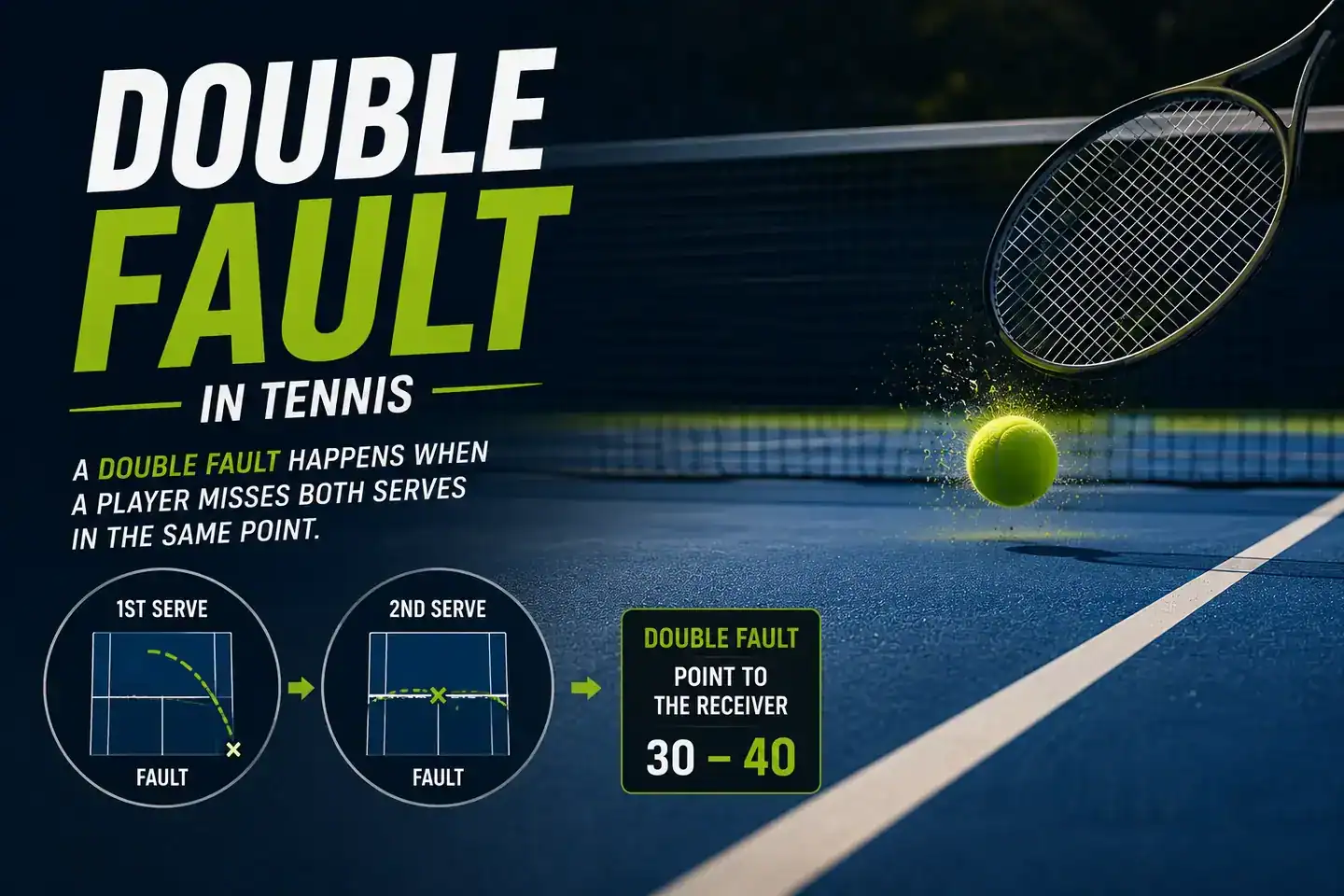

What is a Double Fault in Tennis
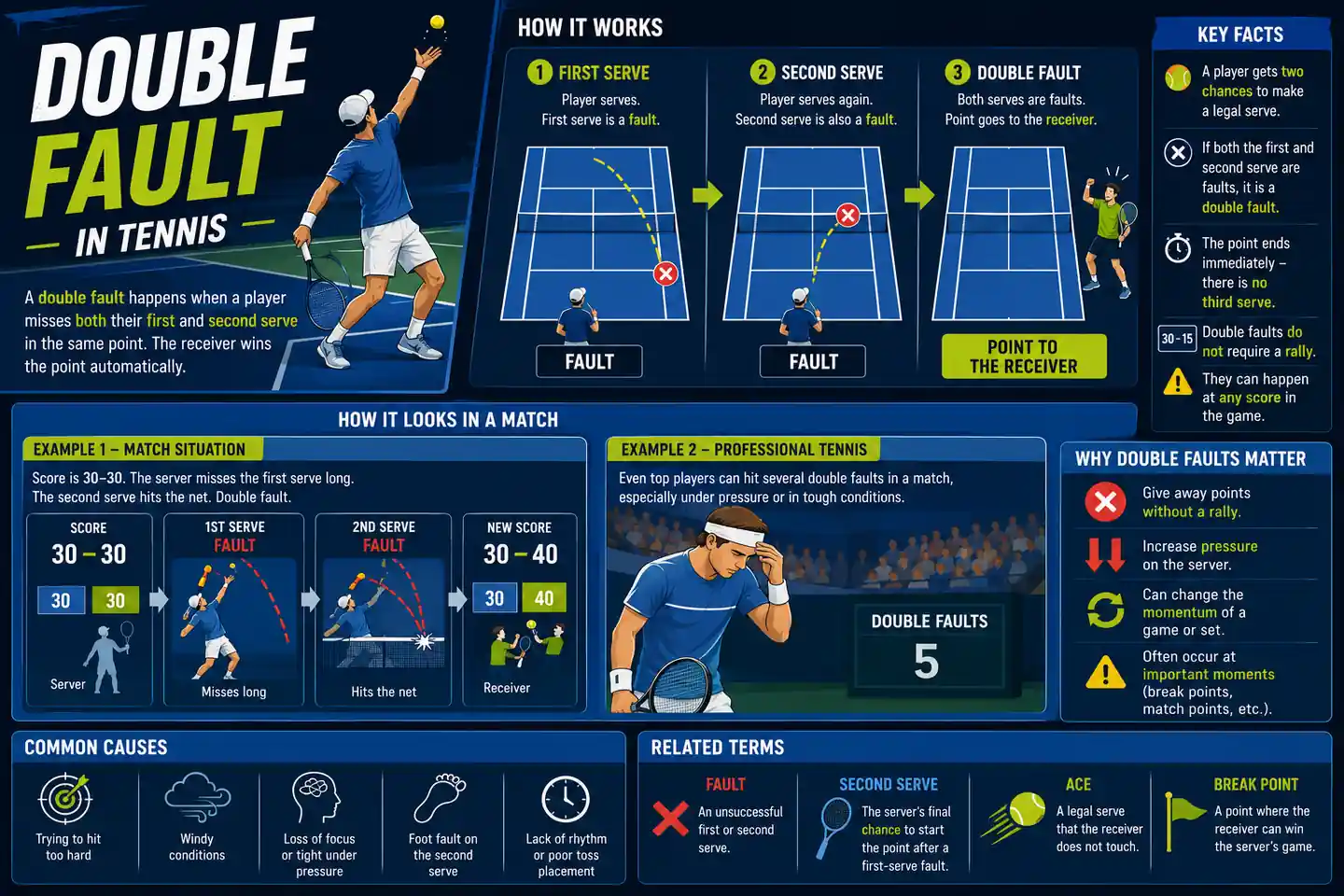
A double fault in tennis happens when a player misses both their first and second serve in the same point. The server immediately loses the point, and the receiver is awarded it.
Detailed Explanation
Every player gets two chances to make a legal serve.
If the first serve is a fault, the player can try again. If the second serve is also a fault, it is called a double fault in tennis.
A double fault can happen if the serve:
- Lands outside the service box.
- Hits the net and does not land in.
- Is a foot fault on the second serve.
Unlike a regular fault, there is no second chance after a double fault. The point ends immediately.
How It Looks in a Match
Example 1 – Match Situation
The score is 30–30. The server misses the first serve long. They then hit the second serve into the net. This is a double fault, and the receiver leads 30–40.
Example 2 – Professional Tennis
Professional players usually take fewer risks on their second serve to avoid double faults. However, even the best players can produce several double faults during a match, especially under pressure or in windy conditions.
Why Double Faults in Tennis Matter
- Give away points without a rally.
- Increase pressure on the server.
- Can change the momentum of a game or set.
- Often occur at important moments, such as break points or match points.
Players who commit frequent double faults can influence several tennis betting markets, including match winner, set betting, and live betting.
Related Terms
Learn more about these related tennis terms:
- Fault – an unsuccessful first or second serve.
- Second Serve – the server’s final chance to start the point after a first-serve fault.
- Ace – a legal serve that the receiver does not touch.
- Break Point – a point where the receiver can win the server’s game.
Betting is only available to participants above 18 years. Please bet responsibly. BeGambleAware.org